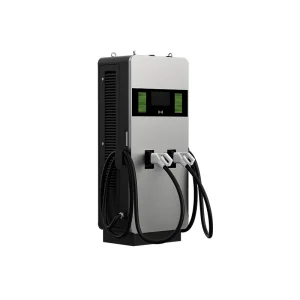

As global transportation shifts rapidly toward electrification, developing economies in Central and South Asia are confronting distinct infrastructural challenges. In Afghanistan, the commercial and industrial demand for electric mobility is driven by the urgent need to diversify fuel reliance and lower import costs. The nation's urban centers, particularly Kabul, Herat, and Mazar-i-Sharif, are witnessing the initial stages of private EV adoption, spearheaded by imported electric sedans and commercial delivery vans.
However, deploying charging infrastructure in Afghanistan requires a radical departure from conventional Western configurations. The local electricity grid, managed by Da Afghanistan Breshna Sherkat (DABS), relies heavily on power imports from neighboring Uzbekistan, Tajikistan, Turkmenistan, and Iran. This layout leads to seasonal supply gaps, severe voltage fluctuations, and regular load-shedding schedules. Consequently, standard AC charging stations designed for stable Western municipal grids risk premature hardware failure or grid overloading.
To counteract grid instability, leading industrial developments and commercial estates in Afghanistan are shifting toward hybrid solar-photovoltaic (PV) arrays coupled with battery energy storage systems (BESS). In this configuration, **AC Level 2 charging stations** emerge as the most cost-effective and structurally feasible option. Unlike DC fast chargers (DCFC), which place massive momentary demand peaks on local power supplies, AC Level 2 chargers draw manageable levels of current (7kW to 22kW), allowing seamless integration with localized solar microgrids.
Designing AC Level 2 chargers for Afghanistan demands engineering configurations that can withstand some of the world's most extreme geographical conditions. The dry, dust-heavy atmosphere in summer and freezing alpine winters require high mechanical protection and thermal management standards.
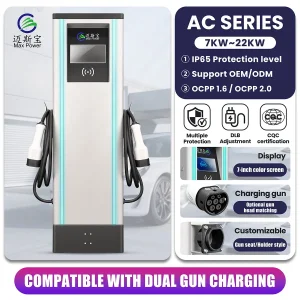
Fine airborne dust particles pose a constant threat to electronic switchgear. Our manufacturing partners supply chargers with certified IP65 ingress protection, ensuring completely sealed internal power electronics and contactors.
To survive frequent brownouts and surges common in Kabul's industrial sectors, units feature a wide input voltage window (typically 150V to 285V AC for single-phase systems) paired with active over/under-voltage trip systems.
Ambient temperatures in Afghanistan range from below -15°C in the central highlands to over 45°C in southern deserts. Integrated climate sensors regulate power output to prevent overheating without service interruption.
Furthermore, compliance with the international standard Open Charge Point Protocol (OCPP 1.6J and OCPP 2.0.1) is critical for local operators. It enables real-time monitoring and billing over low-bandwidth cellular networks, ensuring operators can manage remote sites across provinces without physical intervention.
For organizations sourcing electric vehicle supply equipment (EVSE) for Central Asian projects, the proximity and capacity of Chinese manufacturing clusters offer unmatched advantages. As a primary manufacturer in this space, Dongguan Voltra Charger Co., Ltd. represents the standard of manufacturing maturity required to fulfill large-scale, customized contracts.
Voltra Charger operates a comprehensive production ecosystem combining cutting-edge R&D, automated SMT (Surface Mount Technology) assembly lines, and rigorous product testing facilities. The factory specializes in smart EV charging solutions across residential, commercial, and fleet applications. Key advantages of utilizing Chinese manufacturing lines for the Afghan market include:
By maintaining strict compliance with CE, TUV, and RoHS standards, factories ensure that the hardware deployed in Afghanistan is built to the same strict safety and performance specifications as equipment installed in Western Europe or North America.
Deploying resilient infrastructure with proven manufacturing indicators.
Understanding local use cases is crucial for selecting the correct charging system layout. Our systems are optimized for the following priority verticals:
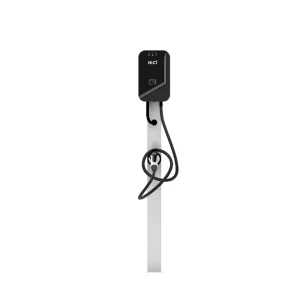
Non-governmental organizations (NGOs) and local transport logistics firms operating within Kabul and Herat are seeking to transition their urban fleets to clean energy to reduce operational overheads. Grouping multiple 7kW or 22kW wall-mounted chargers with integrated RFID access allows secure charging for fleet vehicles during off-peak hours.
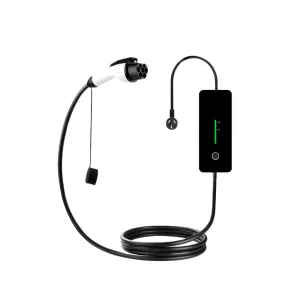
In rural provinces where agricultural processing is shifting to solar power, excess daytime solar energy can be captured and routed to portable Level 2 AC chargers. This enables off-grid charging of local light utility vehicles and field transport equipment.
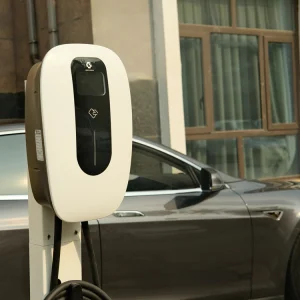
Premium retail spaces, shopping malls, and commercial towers are deploying IP65-rated column chargers to offer charging services to clients, using mobile payment gateways integrated via OCPP 1.6J cloud platforms.



 Voltura Charger