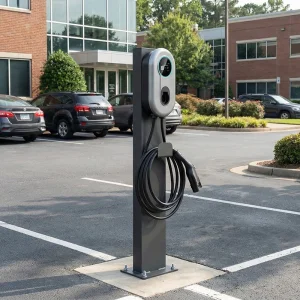
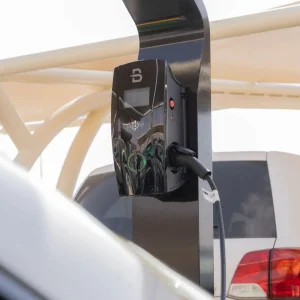
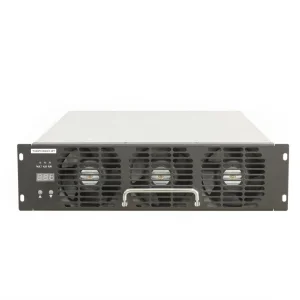
Explore our engineered equipment, range of smart controllers, charging stations, and grid-tied systems designed for commercial and industrial deployment.

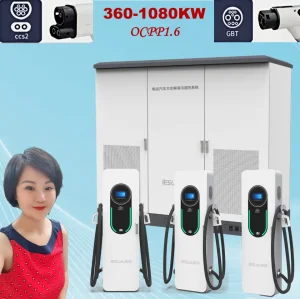
The global transition to electrified mobility is accelerating beyond passenger vehicles into commercial fleets, heavy-duty transit, and decentralized microgrids. As governments in North America, the European Union, and Asia-Pacific enforce strict carbon-neutral targets, the demand for high-reliability Electric Vehicle Service Equipment (EVSE) has shifted from simple AC charging plugs to integrated, grid-interactive energy hubs. Modern C&I (Commercial & Industrial) procurement teams no longer look at EV chargers as isolated hardware assets; instead, they evaluate them as key components of complex energy management ecosystems.
China, representing the vanguard of large-scale EVSE manufacturing, commands a highly integrated supply chain that spans semiconductor packaging, power module design, assembly, and protocol testing. This dominance allows Chinese manufacturers to offer significant pricing advantages while maintaining cutting-edge technological integration, such as liquid-cooled power cabinets, dynamically allocated DC power routing, and native support for advanced protocols like OCPP 2.0.1, ISO 15118 (Plug & Charge), and dynamic load management.
Dongguan Voltra Charger Co., Ltd. is a forward-thinking manufacturer specializing in smart EV charging solutions for residential, commercial, and fleet applications. With a strong focus on innovation and energy efficiency, the company integrates research and development, production, and global sales to deliver reliable and intelligent charging infrastructure.
Voltra Charger offers a comprehensive product portfolio, including home EV charging stations, commercial charging systems, fleet charging solutions, and advanced charging power management units. Designed to meet diverse customer needs, its solutions support both AC and DC charging, ensuring compatibility with a wide range of electric vehicles.
Driven by the growing demand for sustainable mobility, the company emphasizes intelligent power management technologies such as load balancing, real-time monitoring, and energy optimization. These features help users reduce operational costs while improving charging efficiency and grid stability.
Dongguan Voltra Charger Co., Ltd. adheres to strict international quality standards and continuously invests in technological upgrades to enhance product performance and safety. Its solutions are widely applied in residential communities, office buildings, public charging networks, and logistics fleets. With a commitment to green energy and smart transportation, Voltra Charger aims to become a trusted global partner in the EV charging industry, empowering customers with efficient, safe, and future-ready charging solutions.
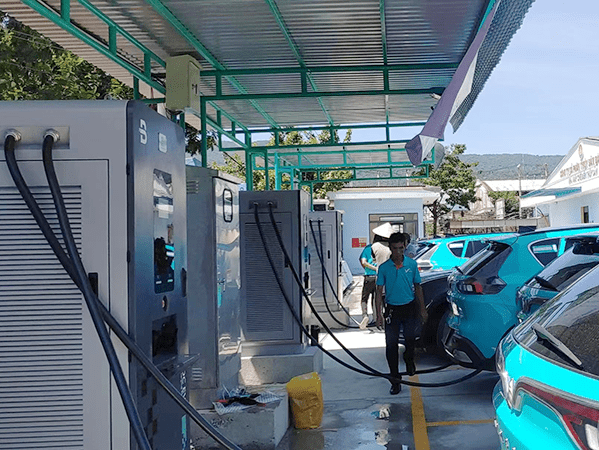
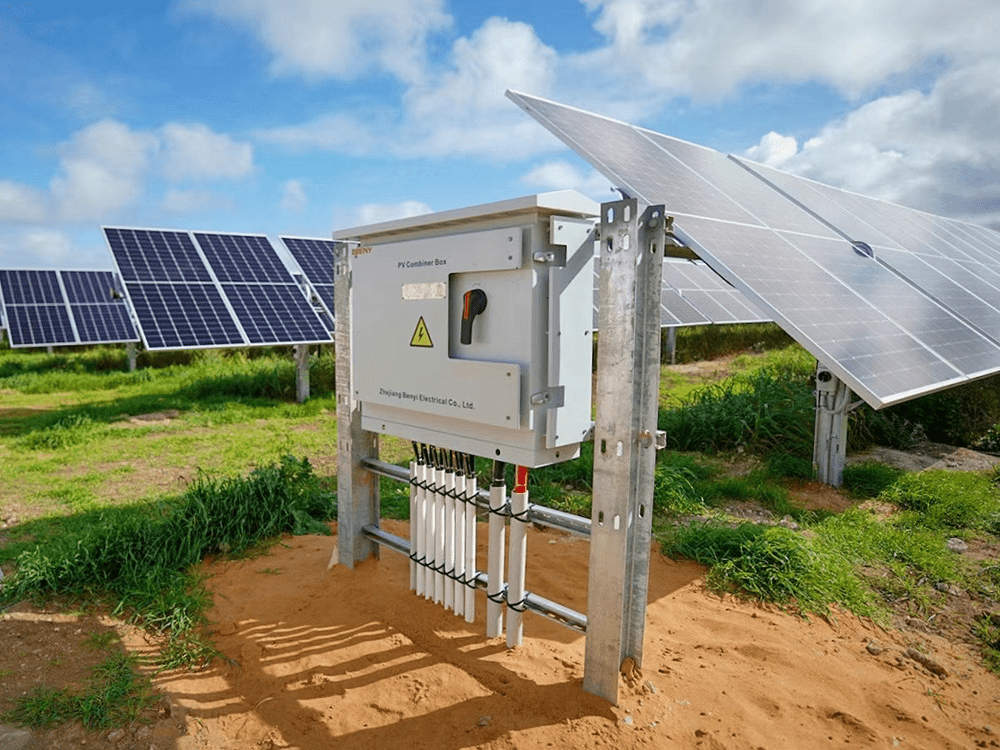
The EVSE sector is moving past static power configurations. Power requirements for next-generation platforms demand dynamic scalability. In the table below, we compare the key technical routes implemented by leading Chinese manufacturers to address future demand.
| Technology Vector | Current Market Standard | Next-Generation Deployment | Grid/System Impact |
|---|---|---|---|
| Power Semiconductor | Silicon (Si) IGBTs (94-96% efficiency) | Silicon Carbide (SiC) MOSFETs (98.5%+) | Reduces cooling overhead, enables higher power density, and extends terminal lifespan. |
| Cooling Technology | Forced Air Cooling (Module level fans) | Liquid Cooling Systems (Power cabinet + Cable) | Allows continuous 600A output per plug, eliminates environmental ingress (dust, water). |
| Dynamic Power Distribution | Fixed Split Charging (e.g., Dual 120kW lines) | Matrix Allocation (10kW granularity routing) | Reduces vehicle dwell time by routing power only to vehicles capable of high-rate acceptance. |
| Grid Integration | Unidirectional charging (G2V) | Bi-Directional V2G / PV-BESS Integration | Enables load-leveling, peak shaving, and energy arbitrage using fleet battery assets. |
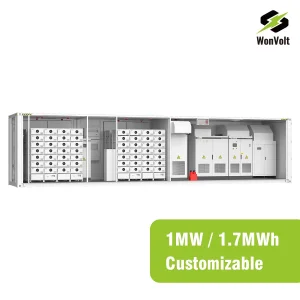
For instance, commercial installations incorporating high-capacity infrastructure (e.g., 1MW/2MWh Solar Storage systems alongside dynamic DC charging) mitigate peak demand surcharges. By coordinating solar generation, stationary battery storage, and dynamic vehicle loads, C&I facility managers can achieve near-zero grid drawing during peak rate intervals.
Designed for logistics hubs requiring heavy-duty charging cycles. Utilizing split cabinets with modular configurations allows overnight depot charging with dynamically scaled power profiles, maximizing asset lifespan.
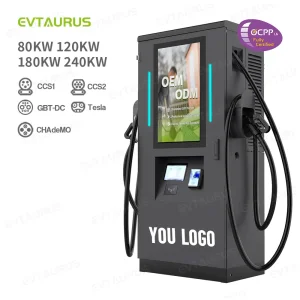
For high-throughput fuel stations requiring rapid replenishment. Liquid-cooled power cabinets paired with high-power DC terminals deliver up to 350+ kW per plug, ensuring vehicles are charged in minutes.
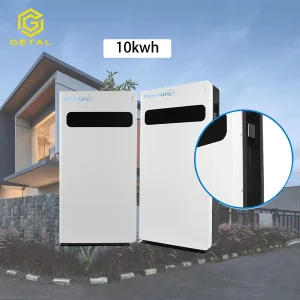
By connecting solar PV generation, lithium LiFePO4 battery energy storage, and electric vehicle chargers, industrial complexes can operate independently of the local utility during peak-pricing intervals.
Deploying charging infrastructure globally requires adherence to local electrical standards, safety regulations, and networking protocols. A key differentiator for premium Chinese manufacturers is their investment in regional certifications. From UL 2231 and UL 2594 in the United States to CE (LVD/EMC) and UKCA in Europe and the United Kingdom, hardware must withstand harsh outdoor environments while assuring operator safety.
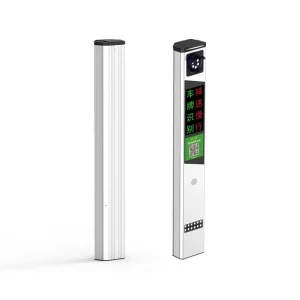
Furthermore, digital connectivity under OCPP demands rigorous cybersecurity compliance. Next-generation chargers must implement secure WebSocket communication (TLS 1.3), secure boot processes to prevent unauthorized firmware manipulation, and physical anti-tampering sensors. In parking systems utilizing Automatic Number Plate Recognition (LPR) or UHF RFID interfaces for access control, data transmission must align with regional data privacy laws, such as GDPR in Europe.
Addressing key technical, compliance, and integration inquiries from global utility operators and C&I buyers.
Explore additional systems, storage units, charging modules, and fleet vehicles that complete our comprehensive infrastructure portfolio.
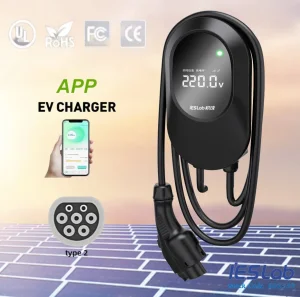

 Voltura Charger