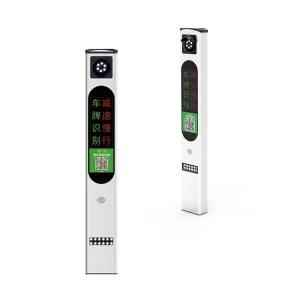
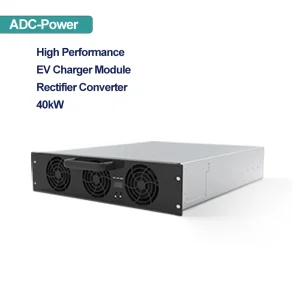
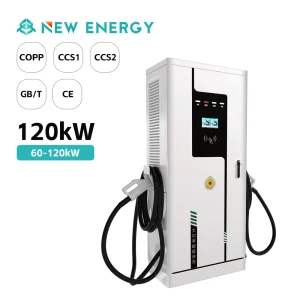
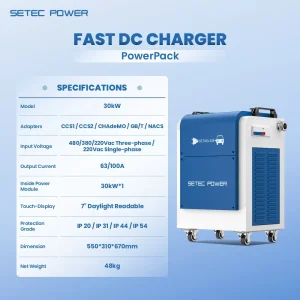
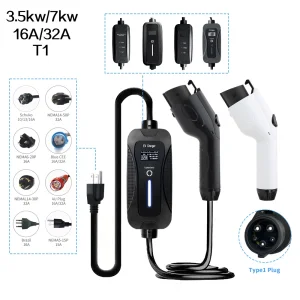
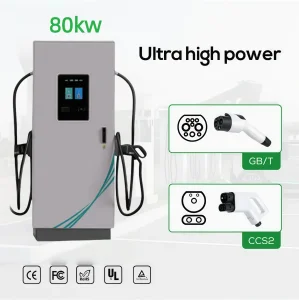
These eight solutions illustrate the range of EV charging, site infrastructure and energy-storage hardware required in real commercial projects. Product titles, source images and destination URLs are retained for procurement traceability; final configuration, connector type, certification and warranty must be confirmed for each destination market.
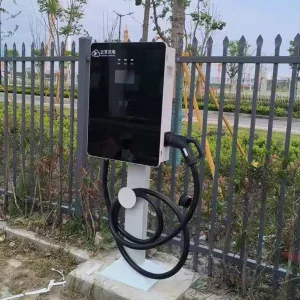

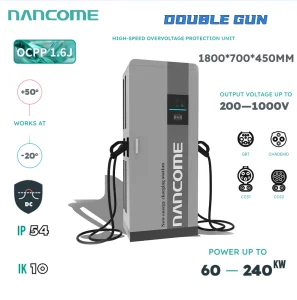
Dongguan Voltra Charger Co., Ltd. is a forward-thinking manufacturer specializing in smart EV charging solutions for residential, commercial, and fleet applications. With a strong focus on innovation and energy efficiency, the company integrates research and development, production, and global sales to deliver reliable and intelligent charging infrastructure.
Voltra Charger offers a comprehensive product portfolio, including home EV charging stations, commercial charging systems, fleet charging solutions, and advanced charging power management units. Designed to meet diverse customer needs, its solutions support both AC and DC charging, ensuring compatibility with a wide range of electric vehicles.
Driven by the growing demand for sustainable mobility, the company emphasizes intelligent power management technologies such as load balancing, real-time monitoring, and energy optimization. These features help users reduce operational costs while improving charging efficiency and grid stability.
Dongguan Voltra Charger Co., Ltd. adheres to strict international quality standards and continuously invests in technological upgrades to enhance product performance and safety. Its solutions are widely applied in residential communities, office buildings, public charging networks, and logistics fleets.
With a commitment to green energy and smart transportation, Voltra Charger aims to become a trusted global partner in the EV charging industry, empowering customers with efficient, safe, and future-ready charging solutions.
For a serious buyer, those statements should translate into verifiable evidence. E-E-A-T in charging infrastructure means experience with real duty cycles, engineering discipline across power electronics and software, authority demonstrated through documentation, and trust built through transparent certification, service and change-control processes. A manufacturer may sell hardware, but commercial customers ultimately buy uptime, safety, interoperability and lifecycle support.
The portfolio combines AC and DC charging hardware with power modules, a cloud-based commercial charger, an outdoor PV-BESS cabinet and complementary site-infrastructure products. This breadth matters because modern projects rarely need only a charger; they need an integrated answer to grid capacity, parking access, energy cost, maintenance and future expansion.
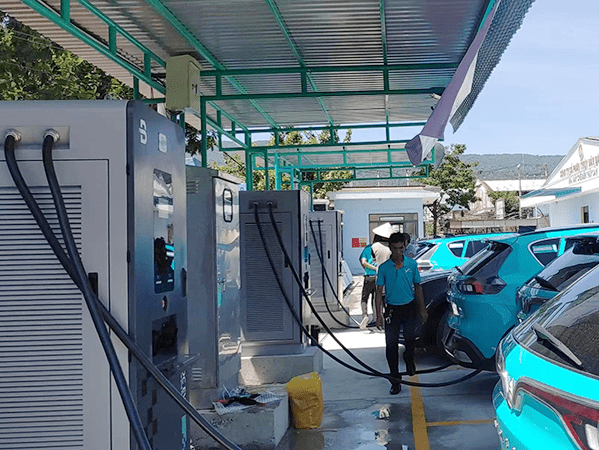

Expertise is proven by test reports and engineering change records, not by slogan alone. Experience is proven by references under similar climate, utility and utilization conditions. Authority is supported by model-specific certificates, OCPP conformance evidence and traceable production processes. Trust depends on clear warranty exclusions, spare-parts availability and cybersecurity policies.
Commercial EV charging has moved beyond a simple equipment purchase. Site owners, fleet managers, retailers, property operators and public charging networks now compare utilization, demand charges, grid constraints, payment integration, service response and expansion paths. In this environment, a charger is part of an energy and operations system.
Global deployment is expanding, but the operating context is highly uneven. A depot in one market may care most about overnight AC charging and load balancing, while a highway corridor operator may need 320–1080 kW scalable DC architecture, liquid-cooled cables, buffered power and advanced payment integration. A logistics fleet may prioritize scheduling and high uptime; a hotel may prioritize destination charging, access control and a clean guest experience.
Product data points above are drawn from the portfolio presented on this page. Global market context is directional and should be validated with current IEA data, utility interconnection rules and local certification requirements before a live tender.
China-based manufacturers are central to the global supply chain because they combine power electronics, mechanical fabrication, cables, connectors, enclosures, controllers, software and energy-storage integration in dense industrial clusters. However, the presence of a capable supply chain does not remove the need for buyer diligence. The strongest projects pair Chinese manufacturing efficiency with local engineering review, market-specific certification and a clearly funded service model.
Localization means engineering for the site, not merely translating the user interface. The same charger may require different connector standards, electrical protections, payment flows, languages, climate ratings, communications paths and service arrangements depending on where it is installed.
Workplace charging usually involves long dwell times, shared parking and employee or visitor billing. AC charging from 7–22 kW combined with dynamic load balancing protects building capacity, while a small number of DC units can serve visitor or urgent needs. Localization includes access control, tariff rules, reimbursement workflows and building-management integration.
Retailers and hotels care about guest experience, signage, payment convenience and low maintenance. Dual-port AC or compact DC chargers can improve dwell time and brand value, but the business case depends on utilization and power availability. Weather protection, lighting, cable management and clear user guidance are practical differentiators.
Depots require predictable scheduling, charger-to-vehicle assignment and disciplined cable management. Overnight AC charging reduces demand charges, while 20–180 kW DC chargers provide opportunity charging for high-utilization routes. Local grid constraints may require load management or BESS buffering. Service response is critical because a failed charger can disrupt route plans.
Bus depots, municipal vans and public-service fleets often need centralized management, high-power charging and strict safety documentation. High-power DC systems can reduce vehicle downtime, but the project must account for transformer capacity, harmonics, connector cooling and emergency procedures. Accessibility and user training are also part of a public-sector deployment.
Industrial sites often combine heavy-duty vehicles, corrosive or dusty environments and long cable runs. Chargers need robust enclosures, filtration, surge protection and clear maintenance access. Power quality and transformer loading should be studied before deployment. In ports and logistics hubs, high uptime and spare-part readiness matter more than cosmetic features.
Residential communities require fair cost allocation, cable routing, fire-safety planning and nighttime support. Smart AC charging with load balancing helps avoid costly service upgrades. A practical local rollout often starts with a capacity study, then adds shared charging, tenant billing and an expansion plan for future EV adoption.
Corridor charging demands high-power DC, modular maintenance and a strong network connection. A 320–1080 kW platform may be appropriate where multiple vehicles require rapid turnaround. Where grid capacity is limited, PV and BESS can buffer demand. Payment, roaming, driver support and cybersecurity are as important as charger output.
Portable and mobile charging is useful for events, temporary depots, roadside assistance and disaster response. A 30–80 kW portable DC system can provide flexible capacity without permanent construction, but operators must verify grounding, weather protection, cable management and local electrical approval before use.
The next competitive phase is not simply adding more kilowatts. It is making charging infrastructure interoperable, grid-aware, serviceable and economically intelligent. A credible roadmap should support phased deployment without forcing the buyer to replace the whole system when requirements change.
Start with market-correct connectors, electrical protection and backend integration. OCPP 1.6J or 2.0.1 support, clear local-language interfaces, payment options and remote diagnostics provide the foundation for reliable operations. Modular power blocks such as 40 kW or 50 kW modules simplify maintenance and output scaling.
Dynamic load balancing, scheduled charging, peak shaving and PV self-consumption reduce operating costs. A 215 kWh class outdoor BESS can support commercial sites with constrained grid capacity. The goal is to coordinate vehicles, buildings and storage instead of treating each charger as an isolated load.
Fleet depots, transit yards and highway corridors will continue to adopt 180 kW, 320 kW and higher output systems. Modular architecture, liquid-cooled cables, intelligent derating and spare-power-module strategies improve availability. High-power projects also require an honest study of transformer capacity and utility upgrade timelines.
ISO 15118 Plug & Charge, V2G/V2H pilots, AI-assisted predictive maintenance and cybersecurity controls will shape future differentiation. Buyers should require secure firmware update processes, role-based access, event logging and clear data ownership. Future-ready hardware should be open enough to integrate with local energy management and payment ecosystems.
The bars are illustrative procurement priorities, not vendor performance scores. Each project should define measurable acceptance criteria before contract award.
For manufacturers, the roadmap means documenting interfaces instead of hiding them. A charger that supports open protocols, replaceable power modules and exportable logs is easier to operate across borders. For buyers, the roadmap means avoiding a lowest-price decision that locks the site into proprietary service, limited payment options or an upgrade path that requires replacing healthy equipment.
China’s charging-industry advantage is not merely cost. It is the density of component suppliers, engineering talent, testing services, tooling, electronics manufacturing and export logistics within a relatively short geographic radius. That density can shorten development cycles and improve responsiveness when a project requires a new connector configuration, enclosure, communications option or packaging format.
For international buyers, the most valuable suppliers combine speed with controlled processes. A fast prototype is useful, but a reliable factory must also demonstrate incoming inspection, in-process testing, functional burn-in, calibration, traceability and change notification. Supply-chain resilience is built through dual sourcing of critical components, disciplined inventory planning, clear escalation paths and documented qualifications for alternate parts.
Power modules, connectors, cables, contactors, fans, enclosures, displays, controllers and cloud services are supported by specialized suppliers. This ecosystem can accelerate new-product introduction, but the buyer should still verify design ownership, test coverage and production responsibility.
Charging hardware benefits from modular assembly and test. Look for serial-number traceability, power-module test records, high-voltage safety checks, firmware version control and final functional testing before shipment. These process controls are more valuable than broad claims about factory size.
Experienced exporters can prepare drawings, labels, manuals, packing lists, test reports and certificate packages required for customs and local approval. Compliance remains market-specific: CE for Europe, FCC and UL-related pathways for North America, GB/T for China, plus local grid and metering rules.
Resilience depends on what happens after shipment. Buyers should confirm critical spare-part lead times, firmware update policy, end-of-life notice periods and procedures for approved component substitutions. A change-control agreement protects long-term compatibility across multiple project phases.
Efficiency should be measured across the whole project, not only at the factory gate. Fast production matters little if drawings are unclear, certificates do not match the ordered SKU or commissioning support is unavailable. The best China-based manufacturing partnerships pair cost-effective production with engineering responsiveness, transparent documentation and a service plan aligned to the buyer’s operating region.
Commercial and industrial charging is growing, but deployment patterns differ sharply by region. North America places strong emphasis on UL-related certification, FCC requirements, CCS1/J1772 compatibility and local service networks. Europe commonly requires CE conformity, CCS2 architecture, OCPP integration and country-specific grid rules. China operates with GB/T standards and a highly developed domestic charging ecosystem. Global projects must translate these differences into the bill of materials and the compliance file.
Fleet operators increasingly evaluate chargers by route impact and total cost of ownership. Overnight AC charging, managed demand and selective DC fast charging can reduce electricity costs. Telematics integration and charger scheduling are often more valuable than peak output that the site cannot support.
Public charging operators depend on utilization, payment success and rapid fault resolution. OCPP backends, roaming agreements, remote reboot, fault-code visibility and local payment integration are essential. Uptime is a commercial metric, not a technical footnote.
Destination charging works best when charging time matches customer or employee dwell time. Smart AC charging and modest DC power may be sufficient. Building owners should plan access rules, tenant billing, signage and emergency procedures before installation.
Dust, vibration, humidity, salt fog and power-quality disturbances challenge equipment in industrial environments. IP ratings, surge protection, filtration and corrosion-resistant enclosures matter. Maintenance access should be designed before the equipment is mounted.
Commercial sites with constrained grid capacity can use PV and battery storage to reduce peak demand and improve resilience. A 215 kWh integrated PV-BESS cabinet is an example of how charging can be combined with energy management. The control strategy must be designed with clear operating boundaries.
Highway and corridor charging can require upgrades to transformers, switchgear and utility service. Modular high-power systems reduce maintenance risk by replacing power blocks rather than entire chargers. Where upgrades are slow, storage-assisted architecture may provide a practical bridge.
Compliance is not a logo placed on a brochure. It is a traceable chain linking the ordered SKU, the tested configuration, the installation rules and the responsible service party. In international projects, the buyer should request evidence rather than accepting generic claims.
Request model-specific certificate scope, report numbers, issue dates and laboratory information. CE, FCC, UL-related listings, GB/T, RoHS and REACH may be relevant depending on the product and market. Where a product family is listed, confirm exactly which variants are covered.
Verify voltage, frequency, grounding system, short-circuit protection, surge protection, residual-current protection and cable rating for the destination site. The same charger may require a different installation manual, breaker specification or neutral configuration in another country.
Confirm CCS1, CCS2, GB/T, J1772 or other market-specific connectors as required. For network integration, verify OCPP 1.6J or 2.0.1 profile support, roaming requirements, ISO 15118 readiness where applicable and the tested backend versions.
Commercial charging often involves billing and data protection. Confirm metering accuracy claims, calibration responsibilities, payment-terminal integration, driver authorization and data residency requirements. Cybersecurity expectations should be documented, not deferred to post-installation.
Temperature, humidity, salt fog, dust, altitude, flooding risk and seismic requirements can alter the enclosure and protection strategy. Outdoor BESS and high-power chargers need ventilation, thermal management and maintenance access under local conditions.
Define response times, remote-support channels, spare-part stocking, firmware escalation and warranty logistics. Train local installers on torque requirements, cable management, safety isolation and commissioning records. A clear service owner is part of compliance.
A strong procurement process reduces technical, commercial and operational risk at the same time. The goal is not to find the lowest quotation; it is to select a partner whose product, documentation and service model fit the site’s real operating conditions.
Review output curves, efficiency, derating, protection coordination, connector ratings, ingress protection and communications. Test the charger with the actual vehicle mix and backend when possible. Treat simulation results as preliminary until validated in a pilot.
Compare installed cost, electricity tariffs, demand charges, maintenance, spare parts, warranty and downtime exposure. A lower purchase price may create higher lifecycle cost if service response is slow or proprietary parts are expensive.
Confirm transformer capacity, cable routes, trenching, protection, ventilation, fire clearance, accessibility and signage. Involve the utility and local authority early. High-power charging can fail commercially when grid upgrades are discovered too late.
Define who monitors faults, who updates firmware, who manages payments and who owns charging data. Require exportable logs and a clear incident process. A charger without an operating model becomes an orphaned asset.
These answers are written for procurement teams, EPC contractors, fleet operators and facilities managers comparing China-based charging manufacturers for commercial and industrial projects.
They include AC and DC charging hardware, power management, network software, payment and access control, installation support, spare parts and lifecycle service. Unlike a basic home charger, a business solution must be designed around fleet schedules, public users, electricity tariffs, grid capacity, compliance and uptime targets.
Use AC charging where vehicles dwell for hours, such as workplaces, hotels and overnight depots. Use DC charging where turnaround time matters, such as public corridors, taxis, buses and high-utilization fleets. Many projects combine both: AC for low-cost base load and DC for peak or opportunity charging.
Many can offer multiple connector and protocol options, but the buyer must specify the market, vehicle mix, backend version and certification pathway. A product title may mention several standards; the final quotation should identify the exact SKU, connector configuration and certificate scope. OCPP conformance and payment integration should be tested, not assumed.
Use a staged process: factory audit, technical clarification, sample or pilot test, factory acceptance test, document review and local commissioning support. Confirm spare-part lead times and change-control rules. Do not rely on a generic product photograph; require the exact label, manual, firmware and bill of materials for the ordered variant.
Request model-specific certificates, test reports, electrical drawings, installation manuals, warranty terms, spare-part lists, cybersecurity statements and OCPP integration evidence. Check local grid and permitting rules separately. The buyer should identify a named service partner, escalation path and spare-parts location before commissioning.
PV can reduce imported energy, while BESS can shave peaks, support constrained sites and improve resilience. Load management prevents unnecessary service upgrades by coordinating chargers with building demand. These technologies work best when the site has clear load data, tariff analysis and an operating strategy for battery state of charge and backup reserve.
The final eight products complete the original portfolio and show how charging projects connect with public-transit networks, mobile charging, PV-storage integration, high-power corridors, refrigeration accessories and fleet infrastructure. Product URLs and source images are preserved; certification, connector and configuration details should be verified against the target deployment.


 Voltura Charger