Engineered to comply with stringent European directives, CE regulations, and utility interconnection standards.
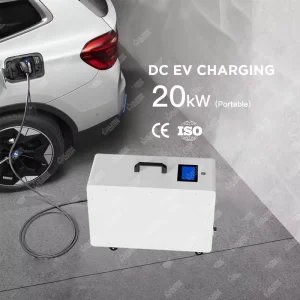
Evaluating the integration of high-density lithium storage with advanced smart microgrids.
As the global demand for distributed renewable energy and high-power electric vehicle grid integration escalates, battery storage solutions have shifted from passive fallback reserves to active, intelligent grid-forming and grid-following systems.
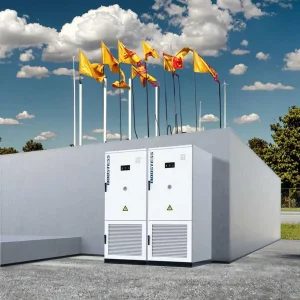
Today's utility-scale and commercial projects require uncompromising quality baselines. CE certification represents more than just regulatory clearance; it serves as a verified confirmation of electrical safety, thermal stability, electromagnetic compatibility, and structural longevity. A fully compliant Battery Energy Storage System (BESS) coordinates complex parameters: balancing high-capacity lithium iron phosphate (LiFePO4) cell chemistry, managing multi-tier Battery Management Systems (BMS), and controlling liquid cooling manifolds to maintain thermal variance under ±3°C.
To gain a competitive edge, project developers must evaluate solutions across three pillars: safety-driven system design, long-term round-trip efficiency (RTE), and standardized local compliance.
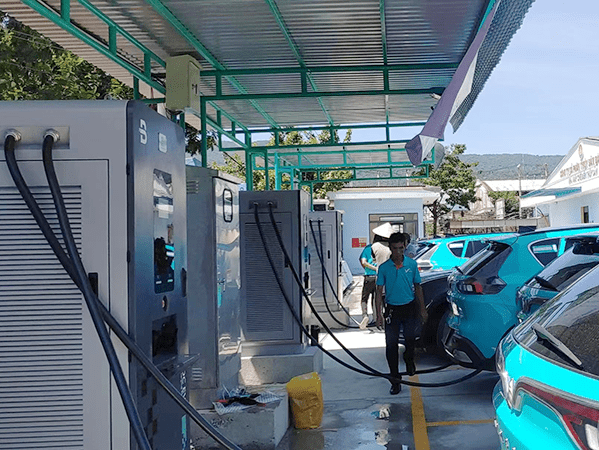
From LiFePO4 chemistry evolution to intelligent solid-state integration and V2G interoperability.
LFP chemistry remains the standard for safety. However, the roadmap targets higher energy density (reaching >180 Wh/kg at system level) through cell-to-pack (CTP) designs and future transitions to semi-solid-state cells, reducing thermal runaway risks to zero.
Next-generation cooling utilizes liquid-to-liquid dynamic circulation with environment-friendly low-viscosity dielectric fluids. Maintaining uniform thermal patterns prevents localized cell stress and halts accelerated degradation.
By treating EVs as mobile energy storage systems (BESS) through Vehicle-to-Grid (V2G) standard protocols (ISO 15118-20), BESS control centers can orchestrate thousands of dynamic grid nodes for virtual power plant (VPP) balancing.
Engineered profiles designed to match commercial, industrial, and utility infrastructure requirements.
| Application Sector | Primary Technical Challenges | System Architecture Configuration | Economic & Operational Benefit |
|---|---|---|---|
| Commercial & Industrial (C&I) | Extreme demand charges, volatile production consumption patterns. | Liquid-cooled modular LFP cabinets (100kWh - 500kWh) integrated with EMS. | Shaves peak loads, reduces demand tariffs by up to 40%, and secures high-power UPS. |
| Utility-Scale Grid Support | Frequency variation, grid congestion, black-start capabilities. | High-voltage containers (1500V DC, 2.5MWh - 5MWh per unit) with centralized PCS. | Enables Primary Frequency Response (PFR), capacity firming, and curtailment avoidance. |
| Residential Solar & Storage | Variable household load, low self-consumption efficiency. | Low-voltage/high-voltage stackable home battery packs (5kWh - 30kWh) with hybrid inverter. | Maximizes solar self-consumption up to 85% and provides uninterruptible domestic backup. |
| Integrated EV Charging Stations | Local transformer limitations, high surge currents from DC fast chargers. | Outdoor solar canopy + BESS + dynamic DC fast-charger allocation hub (All-in-one). | Eliminates grid upgrade expenditures; enables high-power peak-shaving during peak charging times. |
Ensuring operations align with national standards and regional grid-interconnection codes.
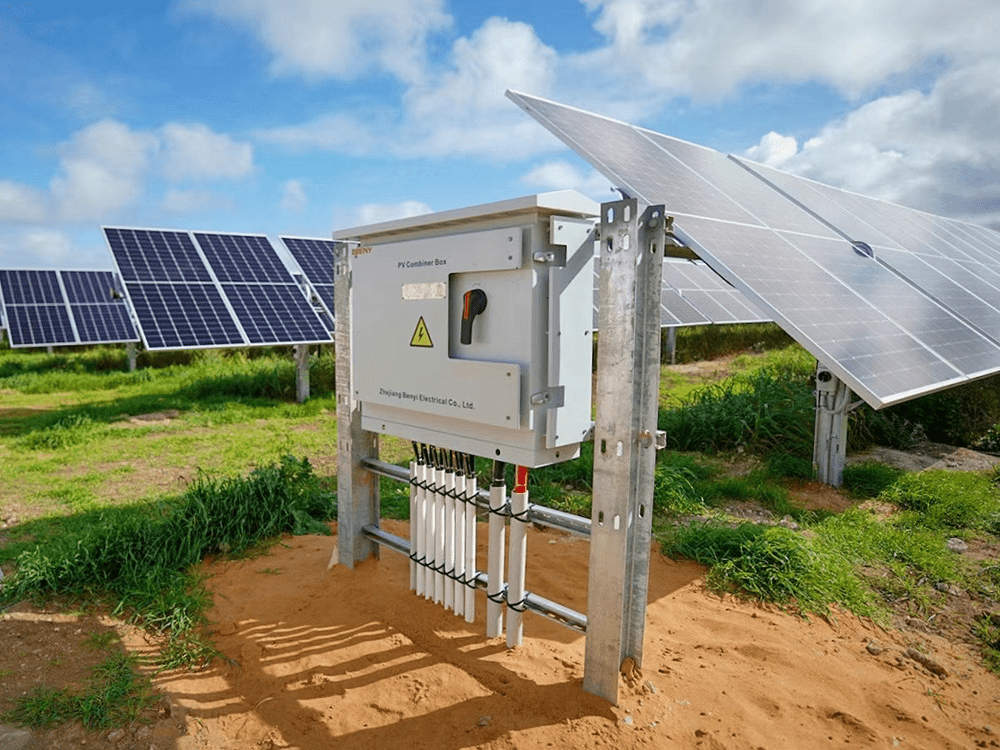
Deploying battery energy storage systems globally requires navigate complex legal and technical frameworks.
Under the newly updated EU Battery Regulation (Regulation 2023/1542), manufacturers must provide clear documentation on environmental impact, life-cycle tracking, and ethical mineral sourcing. Our products are fully CE certified and meet standards like IEC 62619 (safety for industrial lithium systems), EN 50549 (requirements for generating plants connecting to grids), and UL 9540A (unit-level thermal runaway fire testing).
Furthermore, we work with localized EPC partners to provide onsite testing, grid-code adaptation parameters, and post-installation support. This approach helps prevent regulatory delays and ensures smooth grid interconnection.
Advanced automated assembly and robust supply chain coordination from Dongguan, China.
Dongguan Voltra Charger Co., Ltd. is a forward-thinking manufacturer specializing in smart EV charging and battery storage solutions. By integrating research and development, high-precision automated production lines, and strict quality control, we build battery storage and EV charging systems tailored for modern utilities.
Every single lithium iron phosphate cell undergoes strict optical and electrochemical testing. We filter for voltage deviation (ΔV < 2mV) and internal resistance (ΔR < 0.2mΩ) to prevent early system degradation.
To prevent electronic component failures, our battery management boards undergo 72-hour continuous thermal stress chamber testing (burn-in). This ensures active cell balancing functions reliably under heavy cycling.
Before dispatch, our storage containers are subjected to full-scale load simulations, testing their grid synchronization, microgrid transitions, and fault isolation controls under real-world conditions.
Key engineering metrics and operational parameters for international energy project procurement teams.
For industrial buyers and utility operators, evaluating battery energy storage systems goes beyond comparing upfront costs ($/kWh). Enterprise procurement must focus on long-term performance metrics that impact project profitability:
| Parameters | Standard Spec Limit |
|---|---|
| Operating Temperature | -25°C to +55°C |
| Protective Rating | IP54 / NEMA 3R minimum |
| Auxiliary Power Load | < 5% total capacity |
| Communication Protocol | Modbus TCP / DNP3 / IEC 61850 |
Detailed technical answers to common questions about battery energy storage integration and compliance.
Highly scalable options designed for commercial projects, microgrids, and electric vehicle service providers.
 Voltura Charger