Wireless electric vehicle (EV) charging is revolutionizing how we power our modern transport. With this innovation, charging becomes simpler and more efficient. Experts like Dr. Emily Chen, a leader in EV technology, explain, "Understanding how wireless EV charging works is crucial for adoption." Her insights highlight the importance of grasping the technology behind this shift.
Wireless charging utilizes electromagnetic fields. It eliminates the need for physical connections, making the process user-friendly. EV owners can drive over charging pads and start replenishing their batteries seamlessly. This method enhances convenience but raises questions about efficiency and compatibility across various vehicle models.
As we explore how wireless EV charging works, we must consider challenges. Infrastructure development is vital to support widespread use. Additionally, questions about the technology's environmental impact linger. Despite the promise, ongoing research is needed to address these concerns. Wireless charging holds great potential, yet careful thought is required for its future.
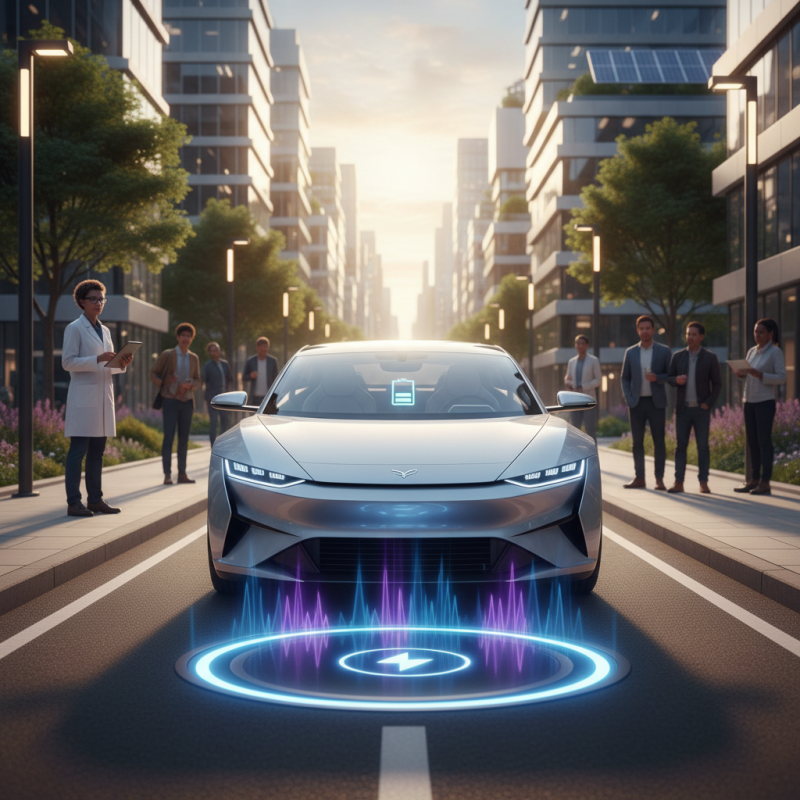
What is Wireless EV Charging and How Does It Function?
Wireless EV charging, often referred to as inductive charging, utilizes electromagnetic fields to transfer energy. This system eliminates the need for physical connectors, allowing vehicles to charge simply by parking over a charging pad. A study from the International Energy Agency highlighted that the market for wireless charging is poised to grow at a compound annual growth rate of 25% between 2023 and 2030. This surge reflects the increasing demand for convenience in electric vehicle (EV) ownership.
How does it function? The technology relies on two main components: a transmitter pad on the ground and a receiver unit in the vehicle. When the vehicle is parked, the transmitter generates an alternating magnetic field that the receiver converts back into electrical energy. Reports indicate that wireless charging systems can achieve efficiencies of up to 90%. However, challenges exist. For example, misalignment between the vehicle and charging pad can decrease efficiency significantly. Additionally, the infrastructure cost is a concern, with installation expenses often running high for urban areas.
Moreover, as with any technology, there are ongoing discussions regarding standardization. Without industry consensus, interoperability between different manufacturers' systems remains a hurdle. These potential pitfalls are crucial for stakeholders to address as wireless EV charging develops.
Wireless EV Charging Efficiency Over Time
This bar chart illustrates the improvement in wireless EV charging efficiency from 2018 to 2023, demonstrating the advancements in technology that enhance the performance of wireless charging systems for modern electric vehicles.
Key Technologies Behind Wireless Charging for Electric Vehicles
Wireless EV charging is changing how we think about fueling electric vehicles. At its core, this technology relies on electromagnetic fields. An inductive coupling system transfers energy without physical connections. This allows for seamless charging. When an electric vehicle is parked over a charging pad, the pad generates an alternating magnetic field. The vehicle’s receiver coil captures this energy and converts it into usable electrical power.
The main technologies behind wireless charging include resonant inductive coupling and magnetic resonance. These methods provide efficiency and flexibility. They enable charging over distances of several centimeters. Practically, this means that drivers may no longer need to plug in a cable. Yet, these systems face challenges like alignment precision and power loss. Designing pads that accommodate various vehicle sizes is another hurdle.
As this technology evolves, it's essential to address its limitations. For instance, deployment costs remain high. Moreover, the efficiency of energy transfer can vary significantly. Wireless charging could potentially lead to greater convenience, but ongoing improvements are necessary to make it a viable option for widespread use. The road ahead will require innovation and careful planning to overcome these challenges.
How Inductive Charging Works: Principles and Methodology
Inductive charging uses magnetic fields to transfer energy wirelessly between two coils. In electric vehicles (EVs), the system comprises a charging pad on the ground and a receiver coil in the vehicle. When the vehicle is parked over the pad, electricity flows through the primary coil, generating a magnetic field. This field induces a current in the secondary coil, powering the vehicle's battery.
While the technology promises convenience and efficiency, several challenges persist. For instance, precise alignment is critical; misalignment can lead to energy loss. Furthermore, the technology's efficiency is currently lower than traditional charging methods. Testing and refinement are necessary to enhance performance.
Inductive charging's potential also raises questions. How will standards and regulations evolve to support this system? What are the infrastructure costs? Addressing these issues will be vital as the technology matures. Wireless charging must balance efficiency, cost, and accessibility for widespread adoption.
How Does Wireless EV Charging Work for Modern Electric Vehicles?
| Aspect |
Description |
| Technology Type |
Inductive charging using electromagnetic fields |
| Charging Method |
Power transfer via magnetic resonance |
| Components |
Primary coil (in ground) & Secondary coil (in vehicle) |
| Efficiency |
Typically ranges from 80% to 90% |
| Range |
Standard range from 5 kW to 20 kW |
| Installation location |
Home garages, public charging stations, and parking lots |
| Safety Features |
Automatic shut-off, foreign object detection |
| Future Trends |
Increased adoption, faster charging speeds, integration with autonomous vehicles |
Advantages and Challenges of Wireless EV Charging Systems
Wireless EV charging systems present notable advantages and challenges. These systems use inductive charging technology. This means vehicles can charge without direct connection to charging stations. According to a report by the International Energy Agency (IEA), the global electric vehicle population is expected to reach 140 million by 2030. Efficiency is crucial. Wireless systems can achieve up to 90% efficiency, similar to conventional systems. This can enhance user experience and convenience.
However, challenges persist. Current wireless charging systems often require precise alignment. Vehicle movement can disrupt the charging process. Further, installation costs remain high. A study from the U.S. Department of Energy indicates that installing a wireless charging infrastructure can cost over $200,000 per unit. Adoption may lag if costs are not reduced. Additionally, there are concerns about electromagnetic fields. Ongoing research is essential to address safety and health implications.
The convenience of charging while parked is appealing. It may encourage more people to adopt electric vehicles. Yet, the technology must advance to overcome the existing hurdles. Advancements in alignment technology and cost reductions are necessary. The future of wireless EV charging holds promise, but it requires careful consideration and ongoing innovation.
Future Prospects and Innovations in Wireless EV Charging Technology
Wireless EV charging technology is rapidly evolving. This innovation removes the need for physical connections. According to a report by the International Energy Agency, the market for wireless charging is expected to grow significantly. By 2030, it could reach $20 billion. This growth highlights the increasing interest in more convenient solutions for electric vehicle owners.
One of the most exciting prospects of wireless EV charging is its integration with smart city infrastructure. Charging pads can be embedded in roads, enabling vehicles to charge while driving. This concept could solve range anxiety and enhance the practicality of EVs. Furthermore, research shows that charging efficiency can reach up to 90%, making this a viable alternative to traditional methods.
Tip: Consider the location of charging pads in urban planning. Accessibility should be a priority for widespread adoption. Additionally, there are challenges with cost and installation that require careful evaluation. As technology advances, innovative solutions will emerge to address these concerns. Embracing these changes is essential for a sustainable future.
FAQS
: Wireless EV charging, or inductive charging, uses electromagnetic fields for energy transfer, allowing charging without physical connectors.
It involves a transmitter pad and a receiver unit in the vehicle. The transmitter creates a magnetic field, converting it into electrical energy.
Some wireless charging systems can achieve efficiencies of up to 90%, similar to conventional methods.
Key challenges include misalignment between the vehicle and charging pad, which can significantly decrease efficiency.
Yes, installation costs can exceed $200,000 per unit in urban areas, affecting widespread adoption.
Precise alignment is crucial; vehicle movement can disrupt the charging process and cause energy loss.
Yes, ongoing research is essential to address potential health implications related to electromagnetic fields.
Advancements in alignment technology and cost reductions are necessary for broader acceptance and improved efficiency.
Industry standardization is vital to address interoperability issues among different manufacturers' systems.
The convenience of charging while parked could encourage more people to adopt electric vehicles, despite current challenges.
Conclusion
Wireless EV charging represents a groundbreaking advancement in electric vehicle technology, allowing for the convenient charging of modern electric vehicles without the need for physical connections. It operates by using electromagnetic fields to transfer energy between two coils—one embedded in the ground and the other in the vehicle. This principle of inductive charging involves a transformer that converts electricity into a magnetic field, which is then transformed back into electricity to power the vehicle's battery.
Despite its numerous advantages, such as enhanced convenience and reduced wear on connectors, wireless EV charging systems face challenges, including efficiency loss and higher implementation costs. However, ongoing innovations and research are set to improve these technologies, making wireless EV charging a viable option for future transportation. Understanding how wireless EV charging works will be crucial for its adoption and integration into everyday life, paving the way for smarter and more sustainable urban mobility solutions.

 Voltura Charger