How wireless EV charging works is becoming a practical question, not a futuristic slogan. China’s leading manufacturers are developing systems that transfer electricity through magnetic fields beneath a parked vehicle. A ground assembly contains a transmitting coil. A matching receiver coil sits under the vehicle’s battery pack. When alignment is acceptable, power electronics convert grid electricity into a controlled, high-frequency current. The magnetic field then crosses the air gap and induces current in the vehicle coil.
ORNL wireless-power expert Omer Onar reported, “We have achieved 100 kW of power transfer with 96% efficiency.” That result shows the technology’s potential, although laboratory performance does not automatically equal daily reliability. Weather, parking accuracy, coil distance, electromagnetic compatibility, and installation quality still matter. Small errors can reduce charging speed.
The best systems use communication between the vehicle and charging pad. Sensors can confirm positioning, detect foreign objects, and regulate power safely. Some platforms support stationary charging, while others are being studied for charging during movement. Most commercial products remain focused on homes, fleets, taxis, and designated parking spaces.
This guide examines China’s top ten wireless EV charging manufacturers and the engineering behind their products. It considers charging power, efficiency, interoperability, control software, service capability, and real-world installation experience. Product claims deserve careful checking. Certification, test conditions, and warranty terms can change the comparison. The industry is advancing quickly, but it is not flawless yet. That is worth remembering.
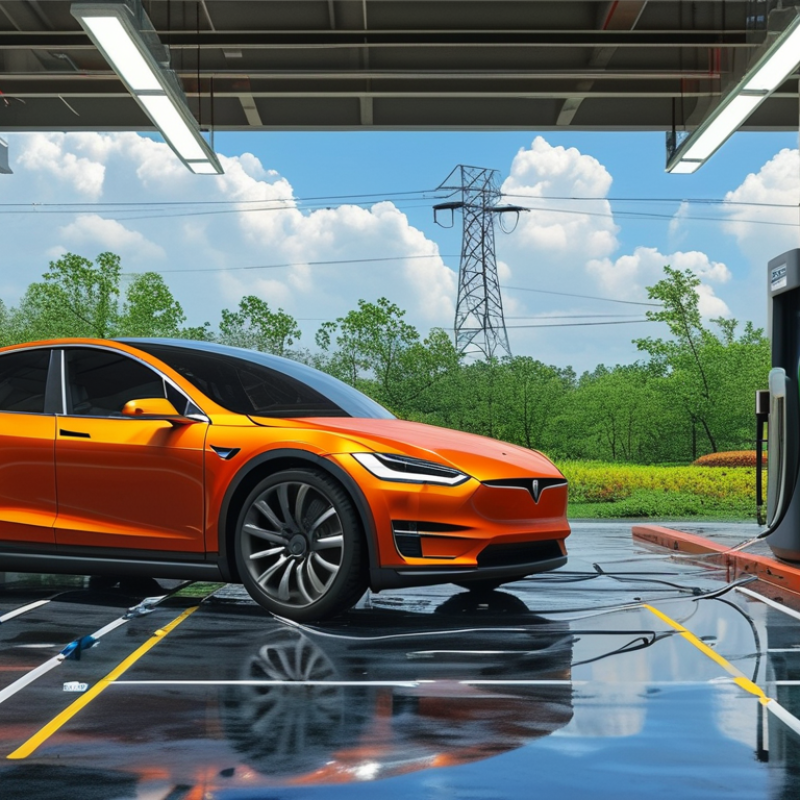
Wireless EV charging transfers electricity through magnetic resonance rather than exposed metal contacts. A ground pad contains a primary copper coil, while a receiver coil sits beneath the vehicle. An inverter converts grid power into high-frequency alternating current. The primary coil then creates a changing magnetic field. The vehicle’s receiver captures that field and induces current. A rectifier changes it into direct current for the battery.
The control system constantly checks coil alignment, temperature, foreign objects, and charging demand. Communication between the vehicle and charger can reduce power when movement or abnormal heating appears. SAE J2954 provides guidance for interoperability, alignment, electromagnetic-field limits, and safety in stationary wireless power transfer. Its importance will grow as electric car sales expand. The IEA Global EV Outlook 2024 reported more than 14 million electric car sales worldwide in 2023.
Efficiency is not simply a socket-to-battery number. Coil spacing, pavement thickness, weather, and parking angle all matter. Laboratory results can look excellent. Real driveways are less cooperative. A U.S. Department of Energy research project demonstrated wireless transfer above 100 kW with reported efficiency near 96%, but that result does not represent every installation. Misalignment can increase losses and charging time. Designers therefore combine magnetic shielding, position sensors, cooling paths, and software controls. The remaining question is practical: will drivers accept slightly higher equipment costs for effortless daily charging?
China’s top ten wireless EV charging manufacturers represent a broad engineering landscape. Their systems usually use resonant inductive power transfer between ground pads and vehicle receivers. Strengths differ across the group. Some focus on compact home chargers, while others develop high-power platforms for taxis, buses, and logistics fleets. Typical products support 3.3 to 22 kilowatts, with higher ratings available for commercial sites.
Several manufacturers stand out through precise alignment technology. Cameras, magnetic sensors, and communication modules help guide drivers over the charging pad. Others emphasize charging efficiency, thermal control, and durable outdoor enclosures. Weather-resistant designs matter in parking areas exposed to rain, dust, and road salt. Fleet-focused suppliers often provide load management software, remote diagnostics, and scheduled charging functions. These features can reduce downtime and simplify maintenance.
Testing experience reveals important differences. A well-designed pad should maintain stable output despite small parking errors. It should also stop safely when foreign objects or living beings enter the transfer area. Installation quality remains critical, even with wireless charging. Uneven concrete or poor cable routing can reduce performance. No ranking is perfect. Some published efficiency figures come from controlled laboratories, not crowded parking lots. Buyers should request field data, compatibility records, service response times, and independent safety documentation before choosing among China’s leading manufacturers.
China Top 10 Wireless EV Charging Manufacturers: How It Works?
Wireless EV charging begins when the driver parks above a ground-mounted charging pad. Magnetic sensors detect the vehicle’s position, while communication checks compatibility and charging permission. A small screen may show alignment: move forward, turn slightly, stop. The process feels simple.
Inside the pad, an inverter converts grid electricity into high-frequency alternating current. A copper coil creates a magnetic field beneath the vehicle. The receiver coil captures this field and converts it into direct current for the battery. Power control then adjusts voltage, temperature, and charging speed several times per second. SAE J2954 provides guidance for interoperability, electromagnetic safety, alignment, and system testing.
According to the International Energy Agency’s Global EV Outlook 2025, electric car sales exceeded 17 million worldwide in 2024. That growth increases interest in convenient charging, especially for taxis, buses, and shared parking areas. Yet real installations are less tidy. Snow, mud, uneven parking, and poor coil alignment can reduce efficiency. The U.S. Department of Energy notes that charging performance depends on equipment, vehicle conditions, and installation quality. A practical test should measure delivered energy, not only the display rating. Small losses matter. Engineers should also inspect foreign objects, thermal limits, drainage, and emergency shutoff behavior. One assumption needs checking: wireless does not automatically mean faster.
Wireless EV charging transfers energy through magnetic resonance between a ground pad and a vehicle receiver. In China, credible installations should reference relevant GB/T requirements alongside international frameworks such as IEC 61980 and SAE J2954. These standards address communication, electromagnetic compatibility, alignment, and power classes. A practical test begins with a parked vehicle, a wet surface, and a slightly offset coil. Real conditions matter. Certification should cover the complete system, not only its charging pad. Installers must verify electrical protection, grounding, software behavior, and interoperability before public use.
Safety depends on layered controls rather than one sensor. Foreign-object detection can reduce power when metal enters the charging field. Living-object detection adds another safeguard near the pad. Temperature sensors monitor coils, cables, and power electronics. Insulation monitoring, leakage protection, and automatic shutdown should respond within defined limits. Communication confirms vehicle presence and charging permission. If alignment becomes unsafe, the system should stop. It sounds simple. Field testing is less simple. Dust, snow, standing water, and damaged pavement can challenge basic assumptions.
Efficiency changes with air gap, lateral offset, coil design, and battery temperature. Clean alignment usually lowers losses and heat. Even a small offset may increase reactive power and extend charging time. Engineers should measure wall-to-battery efficiency, not only pad output. Meter readings at different loads reveal standby losses and thermal derating. Cable charging may still be more efficient in some conditions. That is worth admitting. Wireless convenience has a physical price, and published figures can look better than daily operation. Reliable suppliers should document test methods, maintenance intervals, fault records, and local certification evidence.
China’s wireless EV charging market deserves careful comparison, not a simple ranking. The IEA’s Global EV Outlook 2025 reports more than 17 million electric cars were sold worldwide in 2024, with China exceeding 11 million. This scale supports rapid manufacturing, but factory volume does not guarantee suitable performance.
For private parking, compare pad alignment tolerance, standby power, installation depth, and protection against rain or dust. A driver stopping 10 centimetres off-center should not lose charging reliability. For taxis and fleet depots, examine 11 kW output, thermal control, software monitoring, and service response times. SAE J2954 provides a useful reference for stationary wireless power transfer, including interoperability and safety testing. Ask manufacturers for measured end-to-end efficiency, not peak figures. Small differences become expensive across hundreds of daily charging sessions.
Public roads need a different evaluation. Review foreign-object detection, electromagnetic-field testing, road integration, maintenance access, and performance during snow or heavy rain. The U.S. Department of Energy identifies wireless charging efficiency as a major engineering consideration, while field conditions often reduce laboratory results. That gap matters. Chinese suppliers should provide third-party test reports, production traceability, warranty terms, and evidence from installations with similar vehicle ground clearance. Some comparisons still overvalue charging power and undervalue alignment failures. That is a practical mistake. A lower-power system with dependable positioning may serve a logistics fleet better than a faster system requiring repeated manual correction.
Anonymous capability benchmark for stationary and emerging wireless EV charging applications
| Profile | Primary Use Case | Typical Rated Power | End-to-End Efficiency | Recommended Air Gap | Lateral Alignment Tolerance | Charging Control | Safety Functions | Interoperability Focus | Best Fit | Comparison Priority |
|---|---|---|---|---|---|---|---|---|---|---|
| Profile 01 | Residential overnight charging | 3.7–7.7 kW | 88–93% | 150–250 mm | ±100–150 mm | Automatic power adjustment | Foreign-object detection, temperature monitoring, ground-fault protection | Passenger EV platforms using compatible wireless charging interfaces | Low installation cost and simple home integration | Verify vehicle-side compatibility and standby consumption |
| Profile 02 | Residential premium charging | 7.7–11 kW | 90–94% | 150–300 mm | ±100–200 mm | Dynamic load balancing | Object detection, coil overheating protection, insulation monitoring | SAE J2954- and GB/T 38775-oriented system architecture | Private garages and high-use household vehicles | Check continuous output, thermal performance, and installation depth |
| Profile 03 | Workplace and commercial parking | 7.7–11 kW | 88–92% | 180–300 mm | ±150–200 mm | Networked scheduling and RFID/app access | Access control, leakage protection, emergency stop, diagnostic logging | OCPP-compatible backend integration where available | Office parking, hotels, residential developments | Compare software APIs, billing functions, and multi-unit management |
| Profile 04 | Public parking with frequent vehicle turnover | 11–22 kW | 87–92% | 180–350 mm | ±150–250 mm | Closed-loop alignment assistance | Foreign-object detection, vehicle-presence detection, surge protection | Multi-vehicle compatibility and standardized communication interfaces | Shopping centers, transport hubs, and paid parking facilities | Evaluate uptime, vandal resistance, and service response time |
| Profile 05 | Electric taxi and ride-hailing fleets | 11–22 kW | 88–93% | 150–300 mm | ±100–200 mm | Automated session authentication | Thermal derating, fault isolation, emergency shutdown, data logging | Fleet-management and energy-management system connectivity | High-frequency fleet charging with minimal driver intervention | Compare daily cycle life, maintenance access, and fleet analytics |
| Profile 06 | Electric buses at terminals | 50–150 kW | 85–91% | 200–400 mm | ±200–300 mm | Automated pantograph-free opportunity charging | High-voltage interlock, thermal monitoring, insulation monitoring, emergency stop | Commercial fleet protocols and depot energy management | Urban bus routes with predictable dwell times | Assess peak-grid demand, route-cycle modeling, and civil works |
| Profile 07 | Autonomous parking and robotic charging | 3.7–11 kW | 86–91% | 100–250 mm | ±50–100 mm with guidance | Vehicle-to-infrastructure data exchange | Presence sensing, communication-loss shutdown, foreign-object detection | Robotic parking, positioning sensors, and software integration | Automated garages, research facilities, and controlled sites | Prioritize positioning accuracy and software-development support |
| Profile 08 | Harsh outdoor and industrial environments | 7.7–22 kW | 86–91% | 150–350 mm | ±150–250 mm | Remote monitoring and fault diagnostics | Weatherproof enclosure, corrosion protection, surge protection, insulation monitoring | Industrial communication networks and local control systems | Outdoor depots, logistics yards, and exposed parking areas | Check ingress protection, operating temperature, and salt-fog testing |
| Profile 09 | Bidirectional and vehicle-to-grid research | 3.7–11 kW | 85–90% | 150–300 mm | ±100–200 mm | Bidirectional power-flow control | Grid-islanding protection, anti-backfeed control, insulation monitoring | Vehicle-to-home, vehicle-to-grid, and energy-management interfaces | Pilot projects and distributed-energy demonstrations | Confirm bidirectional certification, utility approval, and battery warranty terms |
| Profile 10 | Dynamic or in-road wireless charging research | 20–200 kW per segment | 70–90% | 100–250 mm | Vehicle-speed dependent | Segment activation and high-speed communication | Road-segment isolation, object detection, electromagnetic-field monitoring | Customized vehicle, road infrastructure, and traffic-management integration | Demonstration corridors and controlled transport research | Evaluate civil-engineering cost, regulatory approval, and lifecycle economics |
A ground pad creates a changing magnetic field through a copper coil. A receiver beneath the vehicle captures that energy. The system converts it into direct current for the battery. No exposed metal plug is required.
Sensors detect the coil position and may reduce charging power. Misalignment can increase heat, energy loss, and charging time. A small parking error matters. The system should stop if alignment becomes unsafe.
Many systems operate between 3.3 and 22 kilowatts. Commercial installations may support higher power levels. Home charging usually needs simpler equipment than fleet charging. Actual output depends on the vehicle and installation.
Outdoor systems use protected enclosures and layered safety controls. They monitor temperature, foreign objects, leakage, and insulation. Standing water or damaged pavement can still reduce performance. Weather resistance is useful, not magical.
Foreign-object detection can reduce power when metal enters the transfer area. Living-object detection adds another protective layer. Automatic shutdown should respond when unsafe conditions appear. Testing remains essential.
Efficiency depends on spacing, alignment, pavement thickness, temperature, and coil design. Clean alignment usually reduces heat and energy loss. Cable charging may perform better in some conditions. Convenience has a physical price.
Request field test results, compatibility records, and independent safety documents. Check service response times, maintenance intervals, and fault records. Ask whether tests used wet surfaces and offset parking. Laboratory figures can be too optimistic.
Installers must prepare the ground pad, wiring, protection, communication, and software controls. Uneven concrete can affect coil spacing and performance. Poor cable routing may create maintenance problems. Installation quality matters greatly.
How wireless EV charging works is based on transferring electrical energy through magnetic fields between a ground-mounted transmitter and a receiving pad installed beneath the vehicle. When the vehicle is correctly aligned, the system detects its position, establishes a secure connection, and converts grid electricity into a controlled magnetic field. The receiver then converts the transferred energy back into usable power for the battery. This process can operate automatically, reducing the need for cables while improving convenience in homes, parking areas, and commercial fleets.
China’s top 10 wireless EV charging manufacturers represent different strengths, including charging efficiency, alignment accuracy, intelligent control, system durability, and flexible installation options. When comparing manufacturers, users should consider power capacity, compatibility, safety protection, communication functions, operating environment, maintenance requirements, and total cost. Key standards, foreign-object detection, temperature monitoring, electromagnetic safety controls, and energy efficiency are also essential factors. The best solution depends on whether it is intended for private parking, public facilities, fleet operations, or future automated charging applications.

Voltura Charger