How EV charging impacts electricity bills depends on more than the number of miles driven. Your home rate, charging schedule, vehicle efficiency, and local utility plan all shape the final cost. A late-night charging session may be cheaper under a time-of-use plan, but not every household has one. Check your actual rate before changing your routine.
Dr. Gil Tal, director of the Plug-in Hybrid & Electric Vehicle Research Center at UC Davis, studies how drivers use electric vehicles. A fair paraphrase of his research is: “Charging costs depend on both electricity prices and when drivers plug in.” That distinction matters. A charger display may show kilowatt-hours, while your bill lists several rate components. Small shifts matter. Seven practical tips can help you compare home charging, public stations, scheduled charging, and vehicle settings without assuming one solution fits everyone. A lower overnight rate can help, but only if your plan and household schedule make it worthwhile. Keep a few weeks of charging and bill data. The pattern may surprise you. It can also be messy: weather, errands, and changing rates complicate a neat estimate. These tips offer a grounded starting point, not a guaranteed savings figure.
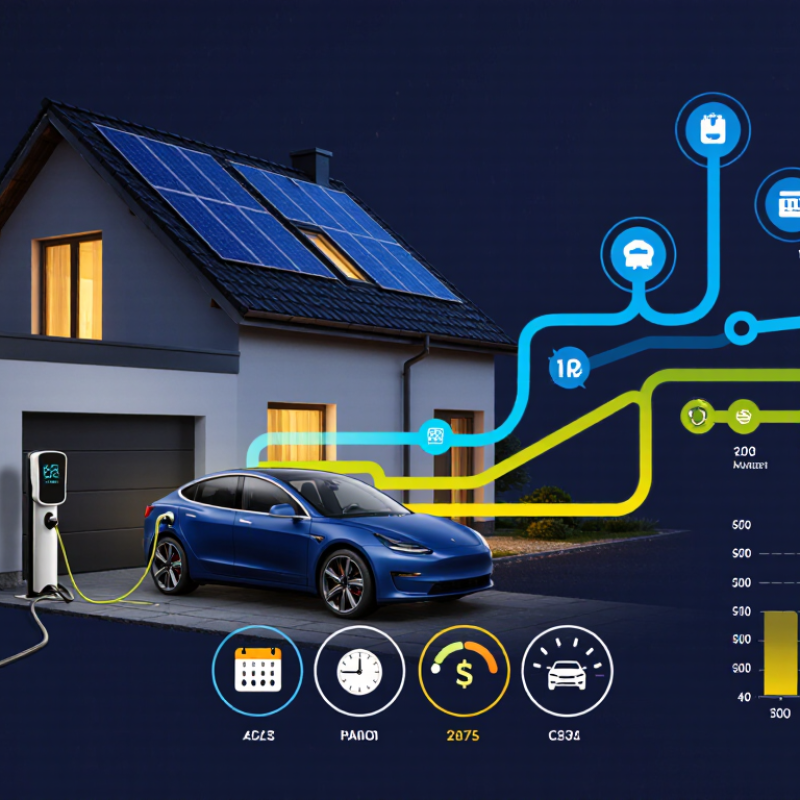
7 Tips to Lower Your EV Charging Electricity Bill
Understand the Factors That Determine EV Charging Costs
An EV charging bill depends on more than battery size. Your local electricity rate, the amount of energy added, charging losses, and the time you plug in all matter. The U.S. Energy Information Administration reported an average residential electricity price of 16.0 cents per kilowatt-hour in 2023. At that rate, adding 60 kWh costs about $9.60 before charging losses or fixed fees. Your actual bill may differ. Rates vary.
Time-of-use plans can make the same charge cheaper overnight and more expensive during evening peaks. Check your utility’s rate schedule, not just the headline price per kilowatt-hour. Public chargers may also use different pricing structures, including per-kWh rates or session fees. The U.S. Department of Energy’s Alternative Fuels Data Center notes that charging location and equipment affect EV charging costs. A faster charger does not automatically mean a cheaper session.
Vehicle efficiency matters, too. The DOE’s Alternative Fuels Data Center says all-electric vehicles can convert more than 77% of grid electricity into power at the wheels. Cold weather, cabin heating, and short trips can still change how much energy you use. It is tempting to estimate costs from battery capacity alone. That estimate is useful, but imperfect. Track a few actual home-charging sessions against your utility bill for a clearer picture.
| Tip | Cost factor | Illustrative cost impact | What to do |
|---|---|---|---|
| 1 | Electricity rate | For 60 kWh delivered at 90% charging efficiency, about 66.7 kWh must be drawn from the grid. At $0.16/kWh, that costs about $10.67; at $0.10/kWh, about $6.67. | Compare your electricity plan’s per-kWh rates. If available, schedule charging during lower-rate periods and check whether time-of-use prices apply to your whole household or only certain hours. |
| 2 | Charging location | Using the same 66.7 kWh example, a rate of $0.35/kWh would cost about $23.33, compared with $10.67 at $0.16/kWh, before any extra fees. | Use home or other lower-priced charging when practical. Before using a public charger, check its per-kWh price and any parking, connection, or session fees. |
| 3 | Charging losses | To store 60 kWh, a 90%-efficient charging session draws about 66.7 kWh. At 94% efficiency, it draws about 63.8 kWh—roughly $0.45 less at $0.16/kWh. | Follow the vehicle and charger manufacturers’ guidance, avoid unnecessarily long charging sessions, and compare actual household meter use over time. Charging efficiency varies with equipment, temperature, and charging conditions. |
| 4 | Vehicle energy use | At 1,000 miles per month, using 18 rather than 15 kWh per 100 miles requires 30 kWh more energy at the battery. At 90% efficiency and $0.16/kWh, that difference is about $5.33 per month. | Use the vehicle’s energy-use display to spot changes. Smooth acceleration, sensible highway speeds, correctly inflated tires, and limiting unnecessary cargo can help reduce energy use. |
| 5 | Session and parking fees | An illustrative $3 fee on each of four charging visits adds $12 to the monthly bill, regardless of the electricity rate. | Check the full price before plugging in, including time-based parking charges, session fees, and idle fees. Move the vehicle promptly when charging is complete if fees may apply. |
| 6 | Home solar generation | If 20 kWh of solar electricity is used for charging instead of grid electricity, the avoided grid purchase is about 22.2 kWh at 90% efficiency—about $3.56 at $0.16/kWh. | Where home solar is available, consider charging when surplus generation is being exported or would otherwise go unused. The actual savings depend on export credits and the value of using that electricity elsewhere. |
| 7 | Plan subscription fees | A plan costing $10 per month that saves $0.05/kWh reaches its break-even point at 200 kWh of charging per month, before considering other terms or fees. | Compare the subscription cost with your typical monthly charging volume and the discounted rate. Check whether savings apply at the locations and times you actually use. |
Example assumptions: Figures are illustrative, in U.S. dollars, and are not universal rates. Calculations exclude taxes and any fees unless stated. Actual costs depend on local electricity prices, vehicle efficiency, charging equipment, weather, and driving habits.
Check your utility account for the actual off-peak window. It might start at 9 p.m., midnight, or later.
No. Weekend rules, seasonal rates, and added fees can change the cost.
Match charging to your usual driving. If your commute uses about one-third of the battery, replacing that amount may be enough. Keep extra range for surprise trips.
Review one bill and compare charging times with the total cost. The displayed rate alone may miss extra fees.
Yes. Use the vehicle’s timer or a suitable smart charger to start during your lower-rate window.
Not necessarily. The vehicle’s onboard charger limits its speed, so match equipment output to that limit.
One analysis found about 88% efficiency for Level 2 charging in tested vehicles. Actual results can vary.
Yes. Cold weather can increase energy use, so revisit your schedule and charge level. Small changes help.
Precondition the cabin while plugged in when convenient. Check cables for damage or loose connections. I still forget sometimes.
How EV charging impacts electricity bills depends on more than the amount of energy a vehicle needs. Charging frequency, battery size, charger efficiency, and local electricity prices all contribute to the total. Understanding these factors makes it easier to estimate costs and spot opportunities to save. Compare available electricity plans and check whether time-of-use rates offer lower prices during certain hours, since the right plan can make a noticeable difference over time.
Whenever practical, schedule charging during off-peak hours and avoid adding energy the vehicle does not need. Efficient charging settings and well-maintained equipment can help reduce wasted electricity, while setting a suitable charge limit may prevent unnecessary charging. Keep track of charging sessions and their costs, then review the pattern to find habits that could be adjusted. Small changes, such as charging at cheaper times and monitoring energy use, can help lower the electricity bill without making everyday driving less convenient.

 Voltura Charger