Electric vehicles are changing when and where electricity is consumed. A car parked at home can become a flexible energy resource. Smart charging adjusts charging speed or timing according to grid conditions, electricity prices, and driver preferences. It does not simply charge whenever power is available.
The timing matters. During evening demand peaks, thousands of chargers can increase pressure on local transformers. Smart software can delay charging until cleaner or less expensive electricity becomes available. It can also protect the driver’s departure schedule. For example, a vehicle needed at 7:00 a.m. might charge gradually overnight instead of drawing maximum power at 6:00 p.m.
Why smart charging matters for energy grids becomes clearer as electric vehicle ownership grows. Grid operators need flexibility, not only more generation and transmission lines. Managed charging can reduce peak demand, support renewable energy, and improve the use of existing infrastructure. However, results depend on accurate forecasts, reliable communication, fair customer incentives, and strong privacy protections.
The technology is promising. It is not magic.
A poorly designed program may inconvenience drivers or benefit only households with flexible schedules. Rural networks and apartment buildings also face different technical challenges. This article examines how smart charging works, which grid problems it can address, and where its limits remain. Evidence from utility programs, charging data, and grid studies offers a more practical view than marketing claims. Some questions remain unsettled, especially around consumer control and long-term battery effects. That uncertainty deserves attention.
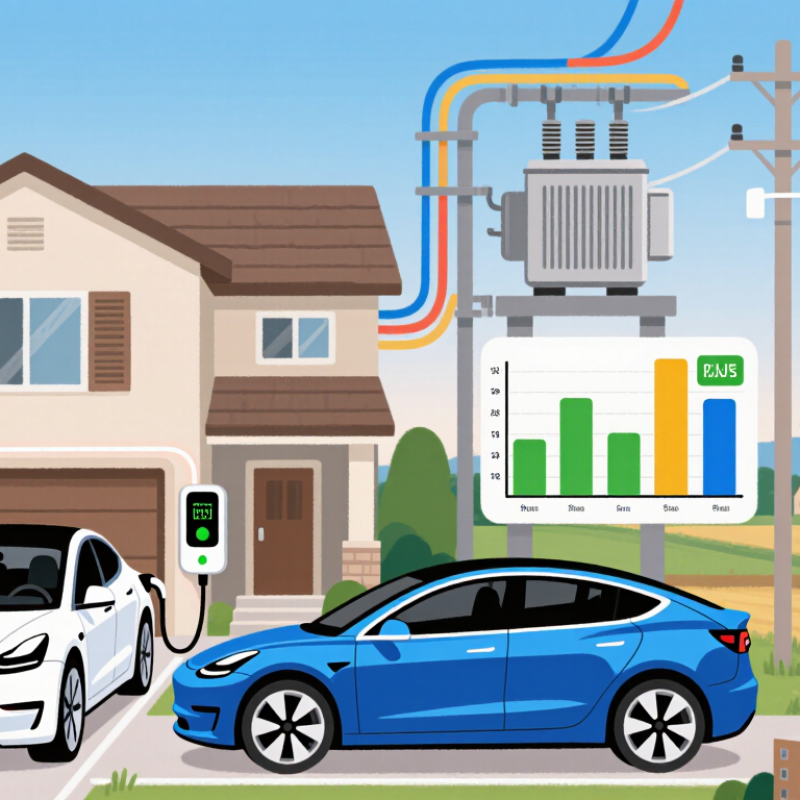
Smart charging means controlling when an electric vehicle charges, not simply plugging it in. A charger receives signals about electricity prices, grid congestion, renewable generation, and the driver’s departure time. It then shifts charging to a suitable period. For example, a vehicle may pause at 6 p.m. and resume when wind generation rises overnight. The driver still receives the requested battery level.
The International Energy Agency reported over 14 million electric car sales in 2023, bringing the global electric car fleet close to 40 million. That growth changes local demand patterns. Without coordination, many vehicles could start charging together after work. Smart charging spreads those loads across available hours. Some systems also support bidirectional charging, allowing energy to return to the grid when approved and technically practical. The U.S. National Renewable Energy Laboratory identifies managed charging as a tool for reducing peak demand and supporting distribution networks.
The process depends on accurate data. A home charger measures power use, while software checks grid conditions and user preferences. It should protect battery health and preserve the driver’s minimum charge. The model is not magic. It can misread a driver’s plans, especially during an unexpected trip. Poor internet access can also interrupt instructions. Clear customer controls, transparent consent, and local grid testing remain essential. Smart charging works best when convenience stays visible.
Smart charging begins with measurement, not a clever app. A smart charger reads electricity prices, grid signals, battery status, and local circuit limits. It then shifts charging away from crowded periods. The International Energy Agency reported more than 17 million electric car sales worldwide in 2024. That scale makes unmanaged evening charging a serious grid concern.
Several technologies make this coordination possible. Advanced metering infrastructure provides near-real-time household demand data. Cloud-based energy management systems combine those readings with weather, travel patterns, and renewable generation forecasts. They can delay a vehicle’s charging cycle by thirty minutes, while still meeting the driver’s departure time. Open communication standards, including ISO 15118, support secure vehicle-to-charger data exchange. Vehicle-to-grid systems can also return stored electricity during short demand peaks. The U.S. Department of Energy identifies managed charging as a tool for reducing peak loads and postponing some distribution upgrades.
The physical layer matters just as much. Dynamic load management prevents several chargers from exceeding a building’s transformer capacity. Local controllers can react within seconds, even when cloud connectivity fails. Small details matter. A cold battery may charge differently from a warm one. Forecasts can still be wrong. A delayed commute, a failed meter, or poor customer settings can weaken the entire system. Cybersecurity needs continuous monitoring, because every connected charger expands the grid’s digital attack surface. Smart charging is promising, but reliability depends on careful testing, transparent data practices, and human oversight.
Smart charging is less about charging slower and more about choosing the right time, power level, and grid signal. When many vehicles plug in at 6 p.m., unmanaged demand can create a sharp evening peak. A smart system delays some sessions, then restores power before drivers need their cars. Small timing changes matter. According to the International Energy Agency’s Global EV Outlook 2024, electric cars used roughly 130 terawatt-hours worldwide in 2023, about 0.5% of global electricity. The same report projects EV electricity demand could reach 1,100 terawatt-hours by 2035 under stated policies. That growth will not affect every neighborhood equally.
Smart charging supports modern grids by turning parked vehicles into flexible demand. It can absorb midday solar, reduce evening peaks, and respond to short supply disruptions. The National Renewable Energy Laboratory’s Electrification Futures Study indicates managed charging can limit local grid stress compared with uncontrolled charging. Grid operators still need accurate forecasts, reliable communication, and customer controls that protect departure times. There is a weakness. If schedules are too rigid, a driver may face a low battery during an unexpected trip. Measurement matters too; promised flexibility is not always delivered flexibility. A charger can follow its schedule perfectly and still miss the household’s real need. That uncomfortable gap deserves more field testing.
Smart charging adjusts electric vehicle charging to match grid conditions, electricity prices, and renewable generation.
For drivers, this can reduce charging costs without changing daily routines. A vehicle parked overnight may charge later, when demand falls or wind power increases. The driver still finds a full battery before morning. Usually.
The benefit is practical, but not automatic. Smart charging can limit expensive evening peaks and reduce pressure on local transformers.
The International Energy Agency reported more than 14 million electric cars sold worldwide in 2023. That growth makes unmanaged charging a serious grid challenge. Utilities can use flexible charging instead of building every upgrade immediately. They also gain clearer demand forecasts.
However, drivers need transparent controls, reliable connections, and simple override options. A delayed charge can be inconvenient during an unexpected trip. That weakness deserves attention.
The environmental gains depend on when electricity is used.
Charging during solar production can absorb clean power that might otherwise be curtailed. The International Council on Clean Transportation found that battery-electric cars produced 66–69% fewer lifecycle emissions than gasoline cars in Europe, based on 2021 conditions. Smart timing can improve that advantage.
It cannot erase manufacturing impacts or solve every grid problem. Homes with limited parking may also struggle to access controlled charging. Better planning is still needed.
Smart charging coordinates electric vehicle charging with grid conditions. Software can delay charging, reduce power, or increase it during renewable generation. A parked vehicle becomes a flexible energy asset, not merely a load.
The scale is already significant. The IEA’s Global EV Outlook 2024 reported nearly 14 million electric car sales in 2023. The global electric car fleet exceeded 40 million.
The IEA’s Electricity 2024 analysis estimated that electric vehicles used about 110 TWh worldwide in 2023. Their share of global electricity demand remained small, at roughly 0.4%.
That number will grow. Fast.
Distribution networks may face local evening peaks, especially where several vehicles charge after work. Transformers, cables, and household circuits can become bottlenecks.
Future progress depends on interoperability and trust. Chargers, vehicles, utilities, and aggregators must exchange reliable data. Open communication standards can reduce costly integration problems.
Dynamic tariffs may reward customers who charge at midday or overnight. However, complicated pricing could exclude households without technical knowledge.
That weakness is often underestimated.
Bidirectional charging offers another possibility. Vehicles could support homes or local networks during short outages. Yet battery warranties, cybersecurity, connection rules, and consumer consent remain difficult questions.
A 2023 National Renewable Energy Laboratory analysis found that managed charging can reduce peak impacts in modeled distribution systems. Models are useful, but they are not reality.
Weather, human behavior, and poor internet connections can disrupt perfect schedules. Future pilots need transparent results, including failures.
Smart charging controls when and how an electric vehicle charges. It uses electricity prices, grid conditions, renewable output, and departure times.
Not necessarily. It mainly chooses better charging periods and power levels. The vehicle can still reach the requested battery level.
Many vehicles usually plug in around 6 p.m. Smart systems delay some sessions and resume them overnight or during renewable generation.
Yes. Charging may increase when midday solar or overnight wind supplies more electricity. Timing depends on local signals and system settings.
The system should protect a minimum charge and respect departure times. Unexpected trips can expose weaknesses. That gap matters.
It may need power measurements, grid updates, user preferences, and departure schedules. Poor internet access can interrupt instructions.
Some systems support bidirectional charging. Approved settings, technical compatibility, battery limits, connection rules, and clear consent are required.
Rigid schedules may leave a driver with a low battery. Complex prices may confuse households. Perfect software still meets imperfect human plans.
Neighborhoods differ. Transformers, cables, weather, and driving habits affect results. Models help, but real streets reveal what models miss.
Smart charging is an intelligent approach to managing electric vehicle charging by adjusting when and how quickly vehicles draw power. Instead of charging at maximum speed whenever they are connected, smart systems use digital communication, connected chargers, electricity prices, grid conditions, and user preferences to schedule charging more efficiently. Key technologies include automated controls, real-time data analysis, demand forecasting, and two-way energy management, which can coordinate many vehicles without compromising drivers’ mobility needs.
Why smart charging matters for energy grids is that it helps balance electricity demand, reduce pressure during peak periods, and make better use of renewable energy. Drivers may benefit from lower charging costs and more convenient schedules, while utilities can improve grid stability and postpone expensive infrastructure upgrades. The environment can also benefit when charging is aligned with cleaner power sources. However, challenges such as data security, equipment compatibility, consumer participation, and fair access remain. Future developments may bring more flexible pricing, improved automation, and broader vehicle-to-grid capabilities.

Voltura Charger