Top 5 Reasons Why Some EVs Charge Slower Than Others?

Time:2026-05-22 Author:Madeline
0%

As electric vehicles (EVs) gain popularity, understanding their charging capabilities becomes essential. A common question arises: "Why do some EVs charge slower than others?" Various factors contribute to this disparity, revealing a complex interplay of technology and design.

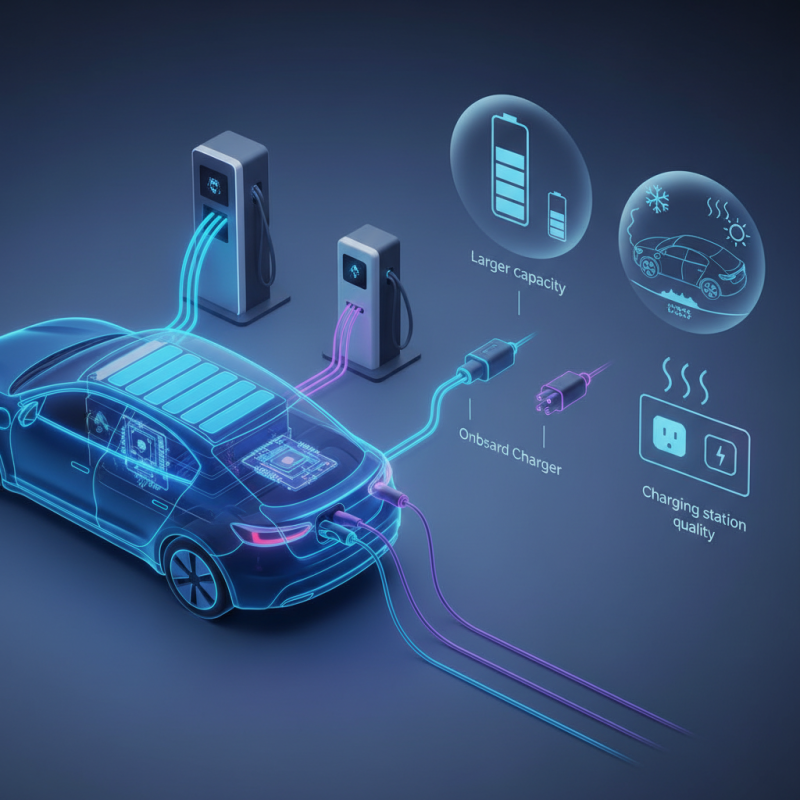
For instance, battery capacity plays a significant role. Larger batteries can take longer to charge, even at higher rates. Additionally, charging infrastructure varies widely. Some EVs support faster charging methods, while others are limited to slower levels. The vehicle's onboard charger capacity also affects charging speed, creating further inconsistencies among different models.

Moreover, external conditions and charging station quality can impact charging time. The efficiency of a charging station's output and the temperature can lead to slower charges. These factors show that while some EVs excel in quick charging, others may lag behind due to design choices or technological limitations. Ultimately, understanding these influences can help consumers make informed decisions when choosing an electric vehicle.
Top 5 Reasons Why Some EVs Charge Slower Than Others?

Charging Station Compatibility and Power Output Variations

Charging station compatibility and power output variations play a significant role in the charging speed of electric vehicles (EVs). Not all charging stations are created equal. Some offer higher kilowatt (kW) ratings, directly impacting how quickly a vehicle can recharge. For instance, a Level 2 charger typically outputs 3.3 to 19.2 kW, while a DC fast charger can deliver 50 kW or more. According to recent industry reports, charging speed can vary widely based on the power output of the station and the vehicle’s acceptance rate.

The vehicle itself greatly influences charging efficiency. Many modern EVs have different charging limits, with some supporting high-speed charging while others do not. This mismatch can lead to slower charging times at stations with higher output. In fact, data indicates that the average charging time can range from 30 minutes for fast chargers to several hours for standard home charging setups, depending on the vehicle's specifications.

Tips: Always check your EV's charging capabilities before selecting a station. Some vehicles can only utilize a fraction of the power available. Also, try to identify charging stations with adjustable outputs to match your vehicle’s needs. This can help you optimize your charging process, especially on long trips.

Battery Chemistry and Its Impact on Charging Speed

Battery chemistry significantly influences how quickly electric vehicles (EVs) can charge. Various battery types, like lithium-ion, vary in charging capabilities. For instance, lithium iron phosphate (LFP) batteries charge more slowly than nickel manganese cobalt (NMC) batteries. This difference arises from their chemical composition and structural characteristics.

Charging speed is affected by numerous factors, including heat generation and voltage stability. Higher temperatures can lead to faster charging but may compromise battery safety and longevity. Proper thermal management systems in some EVs minimize overheating, ensuring a balance between speed and safety.

Tips: Ensure your vehicle runs efficiently by maintaining optimal battery temperatures. Always monitor charging equipment for reliability. Investing in a quality charger can also enhance the charging experience. Users should be cautious, as not all charging stations deliver the same performance. Some may damage batteries if not designed correctly.

Vehicle Design and Aerodynamics Contributing to Charge Rates

Vehicle design significantly impacts the charging rates of electric vehicles (EVs). A study by the International Council on Clean Transportation (ICCT) highlights that aerodynamic efficiency is crucial. EVs with streamlined shapes experience less air resistance, allowing for more energy-efficient driving. This translates to improved battery performance during both driving and charging.

The placement of the battery also plays a vital role. A well-integrated battery system can enhance thermal management. According to a report from the Society of Automotive Engineers (SAE), optimal thermal performance can improve charging efficiency by up to 15%. In contrast, poorly designed battery layouts may lead to overheating and decreased charging speeds.

Moreover, the vehicle's weight affects charging as well. Heavier vehicles often require larger batteries that can take longer to charge. The Environmental Protection Agency (EPA) notes that the weight-to-power ratio directly impacts energy consumption. As a result, EVs need thoughtful engineering to balance performance and charge rates effectively. Designers must reflect on these factors to improve charging experiences for users while optimizing aerodynamic features.

Advanced Charging Technology and Infrastructure Limitations

Charging infrastructure plays a crucial role in the speed at which electric vehicles (EVs) recharge. Advanced charging technology varies significantly across different locations. Many regions still rely on outdated systems. For example, as reported by the International Energy Agency, only about 26% of global public charging stations are fast chargers.

The limitations of current infrastructure can make a noticeable difference in charging times. In urban areas, you might find more fast chargers. However, rural areas often lack such facilities. This disparity in availability directly impacts the user experience. Drivers in cities enjoy the convenience of rapid charging. In contrast, those in less developed areas face longer wait times. Research indicates that consistent access to higher power stations can reduce charging time by nearly 70%.

Some EV models utilize cutting-edge technology that allows for quicker charging. Yet, not every vehicle capitalizes on this capability. Battery compatibility also plays a role. Charging rates decline when batteries are not optimized for certain power levels. Consumers must consider these tech factors when choosing their EVs. Battery health can decline if not monitored properly, leading to slower charging over time. Understanding this connectivity between technology and infrastructure is vital for every EV owner.

Top 5 Reasons Why Some EVs Charge Slower Than Others

Reason Description Impact on Charging Speed
Battery Chemistry Different battery types (e.g., lithium-ion vs. solid-state) have varying charge acceptance rates. Some batteries can handle faster charges without degrading, while others cannot.
Chargers Used The type of charger (level 1, level 2, fast charger) significantly affects charging speed. Level 1 chargers are slower; fast chargers can provide significant speed increases.
Temperature Effects Extreme temperatures can affect battery performance and charging efficiency. Batteries often charge slower in cold weather or when overheated.
Vehicle Design The engineering of the vehicle can influence how efficiently it translates power from the charger. Inadequate power management systems can lead to bottlenecks in charging speeds.
Infrastructure Availability The availability of high-capacity charging stations affects charging options. Limited access to advanced chargers can slow down the overall charging process.

Software Management Systems Influencing Charging Efficiency

Charging efficiency is a pivotal factor in electric vehicles (EVs). One key influence is the software management systems. These systems oversee the entire charging process. They optimize energy flow, manage session timing, and adapt to real-time demands. A study by the International Energy Agency (IEA) shows that inefficient software can lead to a 25% reduction in charging speed.

Data from various EV industry analyses indicates that software frameworks can significantly impact how quickly a vehicle accepts a charge. For instance, outdated algorithms may fail to exploit the full potential of charging infrastructure. The inability to balance battery health and charging speed can result in prolonged charging times. Such inefficiencies are often overlooked, yet they are critical in real-world applications.

Furthermore, the integration of smart charging solutions can enhance the performance of EVs. However, the complexity of these systems may lead to compatibility issues. Many EV owners report confusion with charging station capabilities. A recent survey revealed that 38% of users had experienced slower-than-advertised charging times. This suggests a need for better communication about the underlying software systems influencing charging efficiency. Continuous improvement is essential as the market evolves.

FAQS

: How does vehicle design affect charging rates?

: Vehicle design influences charging rates through aerodynamics and battery placement. Streamlined shapes reduce resistance.

What role does battery placement play?

Proper battery placement enhances thermal management. It can improve charging efficiency by up to 15%.

How does vehicle weight impact charging?

Heavier vehicles need larger batteries, which can take longer to charge. Weight affects energy consumption.

What is the state of charging infrastructure?

Charging infrastructure varies widely. Many areas still use outdated systems, impacting overall charging speed.

Are fast chargers widely available?

Only about 26% of global public charging stations are fast chargers. Urban areas have more options than rural ones.

Can charging times vary between locations?

Yes, charging times vary significantly. Urban drivers benefit from rapid charging, while rural drivers face longer wait times.

What technology improves charging speeds?

Some EV models use advanced technology for faster charging. However, compatibility with the battery also matters.

How does battery health affect charging?

Poorly monitored battery health can lead to slower charging over time. Regular checks are essential for optimal performance.

Why is aerodynamics important for EVs?

Better aerodynamics reduce air resistance. This contributes to improved energy efficiency during driving and charging.

What should consumers consider when choosing an EV?

Consumers need to consider battery compatibility, technology, and infrastructure when selecting their electric vehicle.

Conclusion

The question "Why do some EVs charge slower than others" can be attributed to several key factors. Firstly, the compatibility of charging stations and their power output varies significantly, affecting the speed at which electric vehicles (EVs) can recharge. Additionally, the type of battery chemistry employed by different manufacturers plays a crucial role in influencing charging speeds, as some batteries are inherently more efficient than others.

Moreover, vehicle design and aerodynamics can impact charge rates, as more streamlined designs may facilitate better energy efficiency. Advanced charging technologies are critical, but infrastructural limitations can hinder the potential for faster charging. Finally, software management systems within the EVs themselves can significantly influence overall charging efficiency, leading to variations in performance across different models. As a result, understanding these factors provides insight into the diverse charging experiences faced by EV users.

Madeline

Madeline

Madeline is a dedicated marketing professional with a wealth of expertise in our company's core offerings. With a keen understanding of the industry, she brings a unique perspective to her role, consistently delivering high-quality content that highlights the superior aspects of our products. As......