Electric vehicles (EVs) are revolutionizing the fleet industry. Many companies are eager to adopt this technology. However, effective charging solutions remain a significant challenge. Understanding how to optimize EV charging for fleet vehicles is crucial.
Fleet managers must evaluate several factors when establishing a charging strategy. This includes analyzing charging times, costs, and infrastructure availability. Optimizing charging solutions can also reduce downtime, which is vital for operational efficiency. Companies often face obstacles, such as the need for extensive planning and the variability in vehicle usage patterns. It’s essential to address these concerns by implementing tailored solutions that meet specific fleet requirements.
Continuous improvement is necessary in designing these charging systems. Companies should remain open to feedback and adapt their strategies. By doing so, they can enhance their fleet's performance and sustainability. The right approach here could lead to significant savings. However, it demands careful consideration and commitment to long-term planning. Optimizing EV charging for fleet vehicles is not just a technical challenge; it’s a pathway to greener operations and improved profitability.
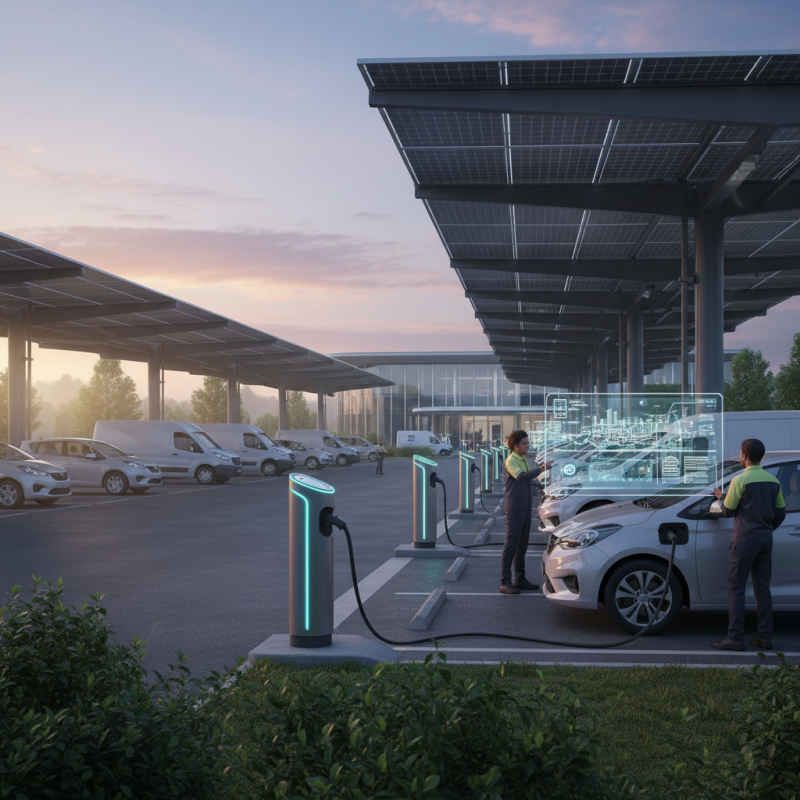
Overview of EV Charging Options for Fleet Vehicles
Electric vehicles (EVs) are increasingly being adopted by fleet operators. A report by the International Energy Agency shows that sales of electric vans and trucks have increased by over 30% annually since 2019. This surge emphasizes the need for effective EV charging solutions tailored for fleet vehicles. Fleet vehicles often require specialized charging infrastructure. These needs can vary greatly based on operational schedules and vehicle types.
Charging options include home charging stations, public charging networks, and depot charging facilities. Each option has its own advantages based on fleet dynamics. For example, having dedicated onsite charging can ensure that vehicles are charged during off-peak hours. This can reduce costs, as electricity prices tend to be lower. However, limited space at depots can pose challenges. Operators may find that maximizing charging capacity is difficult without further investment.
Moreover, operators should consider the deployment of smart charging solutions. This allows for better management and scheduling of charging times. A study from the National Renewable Energy Laboratory indicates that smart charging could reduce operational costs by up to 25%. However, implementing these systems requires upfront investment and technical expertise. This can be a barrier for smaller fleets. Balancing cost and efficiency remains a complex issue for many fleet managers navigating the EV transformation.
Benefits of Optimizing Charging Solutions for Fleets
Optimizing charging solutions for fleet vehicles is crucial for efficiency. Effective charging can lead to significant cost savings and improved operations. Fleet operators who take charging seriously often find better productivity. Reduced downtime during charging times means vehicles are on the road more often.
Tips for optimizing these solutions include analyzing charging patterns. Look at peak usage times to avoid congestion. Additionally, consider the location of charging stations. Placing chargers near the fleet's main operation areas can save time and enhance access.
Another tip is to invest in smart charging technology. This can help schedule charging according to energy prices. By doing so, fleets can reduce energy costs. However, fleets should examine their energy sources. Some energy may not be as renewable as they hope. Regular evaluations can help fleets stay on track with sustainability goals.
Optimize EV Charging Solutions for Fleet Vehicles
Key Factors Influencing Fleet EV Charging Efficiency
Charging solutions for fleet electric vehicles (EVs) hinge on several critical factors.
One major consideration is charging infrastructure.
The placement of chargers affects accessibility and downtime. Locations should include hubs and depots where vehicles are parked frequently.
This method minimizes the distance vehicles need to travel for charging. However, many fleets struggle with limited space for additional chargers.
Solutions like compact charging units or fast-charging stations can alleviate some of these issues.
Another critical element is battery management. Proper battery maintenance can significantly improve charging efficiency.
Fleet managers should monitor battery conditions regularly. This includes checking for wear and optimal charging cycles. Neglecting these practices can lead to decreased performance and shorter battery life.
Additionally, understanding the energy needs of each vehicle is essential. Overloading circuits or improper charging can result in energy waste.
Another factor is the integration of smart technology. Utilizing software can optimize charging schedules.
For example, scheduling charges during off-peak hours can reduce costs and strain on the grid. Yet, many fleets face challenges in implementing such technology.
Training staff to use these tools effectively is necessary for success. Finding a balance between technology and practical user experience can be complex but essential for enhancing overall efficiency.
Technological Innovations in EV Charging Infrastructure
The shift to electric vehicles (EVs) in fleet management opens up new challenges and opportunities. Technological innovations in EV charging infrastructure play a crucial role in this transition. Many fleet operators are exploring fast-charging stations, enabling vehicles to power up during short breaks. This creates efficiency but requires precise planning to avoid bottlenecks during peak hours.
Smart grid technology enhances the way we charge EVs. It allows for real-time monitoring and management of power distribution. However, integrating smart systems may face compatibility issues. Fleet managers need to consider various hardware and software solutions. Not all systems are user-friendly or scalable which can lead to frustration in managing a growing fleet.
Another area of innovation is wireless charging technology. It has immense potential but remains in its infancy. While it promises convenience, the current infrastructure is limited. Adoption may take time as fleets weigh the potential benefits against installation costs. This ongoing exploration highlights the complexities and necessary adjustments within the EV charging landscape.
Optimize EV Charging Solutions for Fleet Vehicles Effectively - Technological Innovations in EV Charging Infrastructure
| Charging Station Type |
Charge Time (hours) |
Output Power (kW) |
Ideal Usage |
Cost per Charge ($) |
| Level 1 (AC) |
8-12 |
1.4 |
Home Charging |
1.00 |
| Level 2 (AC) |
4-8 |
7.2 |
Public Charging Stations |
3.50 |
| DC Fast Charging |
0.5-1 |
50-350 |
Long-Distance Travel |
15.00 |
| Wireless Charging |
Varies |
5-20 |
Parking Lots |
10.00 |
| Ultra-Fast Charging |
<1 |
350+ |
Fleet Operation |
20.00 |
Best Practices for Managing Fleet Charging Operations
Effective management of fleet charging operations is crucial for optimizing electric vehicle (EV) charging solutions. With the rise of electric fleets, accurate data has shown that a well-structured approach can reduce costs significantly. According to the U.S. Department of Energy, fleets can save up to 25% on total energy costs by optimizing charging schedules and utilizing smart technology.
When managing fleet charging, consider the following tips for enhanced efficiency:
1. Implement smart charging systems. These systems can adjust charging rates based on grid demand and electricity prices. This can help fleets avoid peak rates.
2. Perform regular assessments of charging infrastructure. Identifying underutilized chargers ensures resources are deployed efficiently. Surveys indicate that a staggering 30% of charging stations go unused.
3. Monitor charging patterns. Understanding usage trends allows for better forecasting of energy needs. This can uncover inefficiencies, such as undercharging or excessive charging, which may lead to equipment wear.
Even with these strategies, challenges remain. For instance, inconsistent charging times can lead to unbalanced batteries, affecting fleet performance. Acknowledging and refining these issues is imperative for sustainable fleet operations. Keeping an eye on industry benchmarks can help fleets continually adapt and improve their charging tactics while balancing operational demands.
Conclusion
To effectively address "How to optimize EV charging for fleet vehicles," it is essential to explore various EV charging options available for fleets. This begins with understanding the different charging infrastructures like level 1, level 2, and DC fast chargers, each offering unique advantages depending on fleet size and operational needs. Optimizing charging solutions not only enhances efficiency but also reduces costs and emissions, leading to significant operational benefits.
Key factors influencing fleet EV charging efficiency include infrastructure availability, charging speed, and fleet scheduling. Incorporating technological innovations such as smart charging systems and real-time monitoring can greatly enhance the management of fleet charging operations. By following best practices such as strategic planning and leveraging data analytics, fleet managers can ensure seamless integration of EVs into their operations, maximizing performance and sustainability.

 Voltura Charger