An EV charger may sit in a rain-soaked driveway, deliver high current for hours, and be handled by different drivers every day. Safety standards help address those real conditions. They set expectations for electrical protection, temperature control, enclosure strength, and reliable operation. For buyers asking, “What safety standards should EV chargers meet,” the answer depends partly on the charger type, installation, and market.
Reliability engineer Michael Pecht describes reliability as a product’s ability to perform its intended function under stated conditions. That principle matters here. A charger should not merely power a vehicle; it should do so predictably, including when a cable is stressed or temperatures rise. Look for relevant certification and standards, such as UL 2594 for AC charging equipment, UL 2231 for personnel protection, and IEC 61851 for conductive charging systems. Requirements vary by region, so verify the exact model and local installation rules.
Details count. Check the product label, certification listing, cable condition, and specified weather rating. A familiar brand name is not proof of compliance. Nor does a certification guarantee a flawless installation. That distinction is easy to miss. This guide examines seven safety standards and explains what each can tell buyers before they choose a home or workplace charger. It also flags a practical limitation: standards reduce risk, but regular inspection and correct installation still matter.
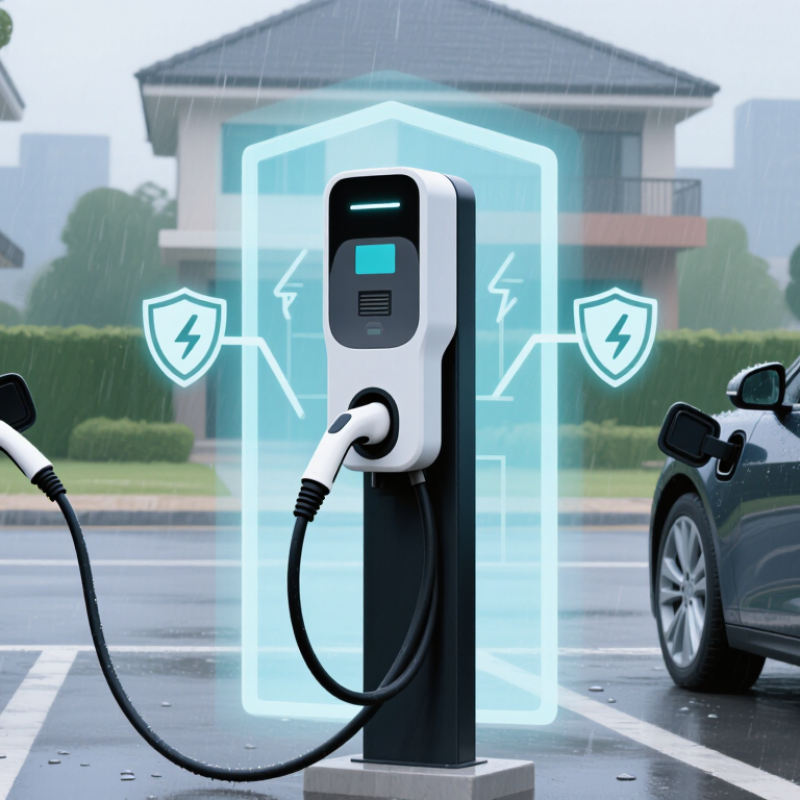
EV charger safety standards turn technical risks into checks buyers can understand. They set expectations for insulation, grounding, temperature control, enclosure strength, and protection against electrical faults. In practice, these checks help reduce shock, overheating, fire, and water-related hazards during normal use. They also make products easier to compare because testing follows defined methods instead of vague promises. That matters. An outdoor charger beside a driveway faces rain, dust, sunlight, and repeated cable handling.
Tips: Check for certification from a qualified independent testing body for your market. Read the installation guide, confirm indoor or outdoor suitability, and match the charger’s power needs to your home’s circuit. Ask a licensed electrician about grounding and protective devices before installation. A sticker alone is not the whole story.
Standards define a safety baseline; they cannot make every setup risk-free. A tested charger may still be installed poorly, damaged by impact, or connected to unsuitable wiring. Treat certification as one part of the decision, alongside clear documentation and proper installation. Labels can feel reassuring, perhaps too reassuring: they cannot tell you whether a cracked cable is safe. Inspect the connector and cable periodically, especially after a hard tug or winter freeze.
UL 2594 and UL 2231 address different parts of EV charging safety. UL 2594 evaluates the charging equipment itself, including electrical construction and protection under defined operating conditions. UL 2231 focuses on protection against electric shock, including safeguards that respond to hazardous electrical faults. In practical terms, one concerns the charger; the other concerns people near its energized parts. Both matter.
The International Energy Agency’s Global EV Outlook 2025 reports that public charging points grew by more than 30% in 2024, surpassing five million worldwide. More charging equipment makes clear safety checks increasingly important. Check that the exact charger model is certified to the relevant standards, not merely described as “compliant.” Look for a certification mark, confirm the unit’s current rating, and match it to the circuit and installation conditions. A label alone is not the whole story. Outdoor units face rain, dust, and temperature swings; installation and maintenance still matter. I would also verify that protective devices work as intended, rather than assuming a standard mark guarantees a perfect setup.
Use this comparison to understand what each standard addresses and what to verify before purchasing or installing electric vehicle supply equipment (EVSE). Applicability depends on the equipment type, market, and locally adopted requirements.
| Standard | Primary scope | Why it matters to buyers | What to verify |
|---|---|---|---|
| UL 2594 Electric Vehicle Supply Equipment |
Safety requirements for EVSE, particularly equipment that supplies AC power to an electric vehicle. | Addresses hazards associated with the charging equipment, including electrical construction and operation. | Check that the complete EVSE model—not just an individual component—is certified or listed to the applicable edition for the intended market. |
| UL 2231-1 Personnel Protection Systems for EV Supply Circuits — General Requirements |
General requirements for systems intended to protect people from electric shock in EV supply circuits. | Provides the general safety framework for personnel-protection functions used in EV charging systems. | Confirm that the equipment’s protection approach is evaluated for its intended charging configuration and installation. |
| UL 2231-2 Personnel Protection Systems for EV Supply Circuits — Particular Requirements |
Particular requirements for protective devices used in EV charging systems. | Complements the general requirements in UL 2231-1 and focuses on protection against electric shock. | Ask which protective device and system configuration were evaluated; do not assume a feature name alone proves compliance. |
| UL 2202 DC Charging Equipment for Electric Vehicles |
Safety requirements for equipment that supplies DC charging power to electric vehicles. | Relevant to DC fast-charging equipment, which has different electrical characteristics and construction from AC EVSE. | For DC equipment, verify certification to the applicable requirements for the complete charger and its intended use. |
| UL 2251 Plugs, Receptacles, and Couplers for Electric Vehicles |
Requirements for EV plugs, receptacles, connectors, and couplers used to connect charging equipment and vehicles. | These connection components are exposed to repeated use and must be suitable for their electrical and mechanical application. | Check that the connector type and ratings match the equipment, vehicle interface, and charging application. |
| UL 62 Flexible Cords and Cables |
Requirements for flexible cords and cables, including relevant cable constructions used in electrical equipment. | Can be relevant to the flexible charging cable supplied with EVSE; it does not by itself certify the complete charger. | Verify cable suitability, ratings, and evaluation as part of the finished EVSE assembly. |
| CSA C22.2 No. 280 Vehicle Supply Equipment |
Canadian requirements for vehicle supply equipment. | Useful when selecting EVSE for Canada, where applicable Canadian certification and installation requirements must be considered. | Confirm that the equipment carries an accepted Canadian certification for the specific model and that local electrical-code requirements are met. |
Buyer note: Standards and adopted editions can change, and not every standard applies to every charger. Check the product’s certification documentation, intended market, installation instructions, and local electrical-code requirements with the relevant authority or a qualified installer.
IEC 61851 and IEC 62196 address different parts of EV charging safety. IEC 61851-1 sets general requirements for conductive charging equipment, including control functions and protection during charging. IEC 62196 covers plugs, socket-outlets, vehicle connectors, and inlets. Together, they help buyers assess the charging system and the physical connection—not just the charger’s advertised power.
Small details matter. Check which editions and regional adoptions a product claims to meet, then request test documentation for the exact model. Ask how the connector handles heat, repeated mating, moisture, and cable strain. A connector that feels solid in the hand still needs evidence behind it. Compliance claims can also be easy to misread; a standard reference alone does not prove every installation is suitable.
The market is growing quickly. The International Energy Agency’s Global EV Outlook 2024 reports that public charging points worldwide exceeded four million in 2023, up about 40% from 2022. More equipment means more reason to inspect compatibility and installation guidance carefully. I would not treat a standards mark as a substitute for checking the site, cable reach, and local requirements. A small omission can matter.
NEC Article 625 covers electric vehicle power-transfer equipment and its installation. It guides circuit design, wiring, equipment placement, and protection. The applicable NEC edition depends on local adoption, so confirm requirements with the local authority before work begins. An electrician should check the panel capacity, circuit rating, and cable route—not just the charger’s advertised output. A neat drawing can still miss a crowded panel or a long cable run.
SAE J1772 defines a common charging connection and the control signals exchanged between a vehicle and charging equipment. Those signals help confirm connection status and communicate the current available for charging. The connector alone does not guarantee that every vehicle and charger combination supports the same charging speed or features. Check the equipment documentation. Small details matter. Damaged plugs, loose outlets, or cables pinched under a garage door can create practical safety risks.
Tips: Match the circuit to the equipment’s nameplate and the locally adopted code. Keep the charging cable clear of walkways, standing water, and sharp edges. Ask for permits and inspections where required. If a connector feels unusually hot or charging repeatedly stops, pause use and have the setup inspected. Don’t guess. A second site check can catch mistakes before installation.
Example circuit ratings based on the NEC rule to size branch-circuit conductors and overcurrent protection for EV charging loads at 125% of the EVSE’s rated output current.
Examples: 16 A → 20 A, 32 A → 40 A, 40 A → 50 A, and 48 A → 60 A. SAE J1772 specifies the charging interface; NEC Article 625 addresses EV charging equipment installation. Confirm requirements against the locally adopted NEC edition, equipment instructions, and installation conditions.
A certification logo is a starting point, not proof that every charger configuration is suitable. Ask for the exact model number and certification record. Then check the issuing organization’s online directory, where available. Match the model, electrical rating, and intended use. A record for a similar-looking unit may not cover yours. That detail matters.
Check which standards and requirements apply where the charger will be installed. UL 2594 and IEC 61851 are examples of EV charging equipment standards, but neither automatically confirms compliance everywhere. Verify that the certificate is current and covers the specific product, not just a component inside it. Ask for the test or certification documentation if details are unclear. Local electrical rules may also require a qualified installer or inspection.
Compare the charger’s rated current and voltage with the planned circuit and vehicle. Check whether it is approved for indoor or outdoor use, and note its stated temperature and weather limits. Ask the installer to confirm that the wiring, protective devices, and mounting location fit the manufacturer’s instructions. Paperwork can look convincing and still leave gaps. I would not rely on a sales-page badge alone; product records and installation conditions deserve a closer look.
They assess insulation, grounding, temperature control, enclosure strength, and protection from electrical faults. These checks can reduce shock and overheating risks. They cannot prevent every problem.
No. Certification shows that a model was tested against defined requirements. Poor installation, damaged wiring, or a cracked cable can still create hazards. Labels are not magic.
Confirm certification for the exact model and market. Read the installation guide, check indoor or outdoor suitability, and match its power needs to your home circuit.
Equipment testing examines the charger’s electrical construction and operation. Shock protection checks safeguards against hazardous electrical faults. Both affect people and equipment.
They address charging functions, plugs, sockets, vehicle connectors, and inlets. Check the claimed standard editions and ask for test documents for the exact model.
Check its fit and cable strain relief. Ask how it handles heat, moisture, and repeated connection. A solid feel alone proves little.
Rain, dust, sunlight, and temperature changes can affect equipment. Confirm outdoor suitability, follow installation guidance, and inspect the cable after a hard tug or freeze.
Ask a licensed electrician to assess grounding, protective devices, and circuit capacity. A certified charger can still be connected poorly. I might have trusted the label too much.
EV charger safety standards help buyers assess whether charging equipment is designed to reduce risks such as electric shock, overheating, and unsafe connections. What safety standards should EV chargers meet depends on the charger type, its intended use, and where it will be installed. UL 2594 addresses the safety of charging equipment, while UL 2231 covers personnel protection against electric shock. IEC 61851 sets requirements for electric vehicle charging systems, and IEC 62196 covers plugs, socket outlets, and vehicle connectors.
Installation and vehicle compatibility matter too. NEC Article 625 provides requirements for installing EV charging equipment, while SAE J1772 defines charging and connector requirements for compatible systems. Buyers can verify a charger’s listed certifications and documentation, confirm that its connector matches their vehicle, and check that the equipment suits the planned installation. Reviewing these details helps buyers choose a compliant charger and plan for safe, reliable use.

Voltura Charger