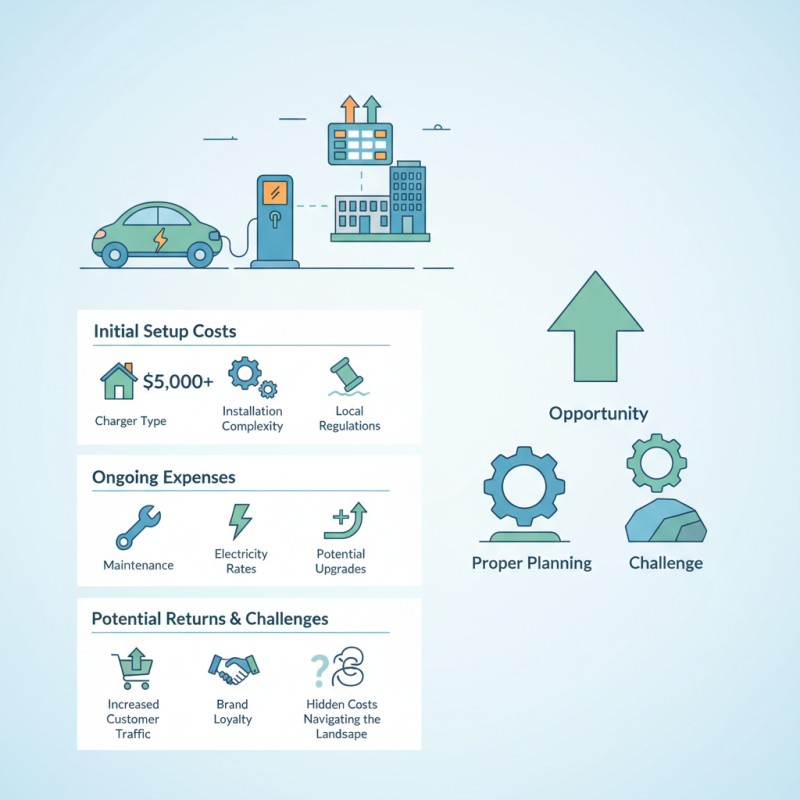
As the electric vehicle (EV) market continues to grow rapidly, businesses must consider the question, "What is the cost of setting up a commercial EV charger?" According to a report by the International Energy Agency, global EV sales surged by 43% in 2020, highlighting the urgency for commercial spaces to adapt. The cost of installing commercial EV chargers can vary widely. Factors include charger type, installation complexity, and local regulations. Estimates suggest initial installation costs can range from $5,000 to over $100,000, depending on these variables.
However, understanding the ongoing expenses is essential. Maintenance, electricity rates, and potential upgrades contribute significantly to the total cost. A study from Automotive News indicates that businesses can expect returns on investment through increased customer traffic and brand loyalty. Still, many companies are unsure about these hidden costs. Proper planning is crucial to navigate this evolving landscape.
Embracing EV chargers presents opportunities and challenges for businesses. With the right information and investment, they can enhance their service offerings and stay competitive. Yet, identifying the ideal solution requires thorough research and reflection on long-term benefits versus upfront expenses.
Factors Influencing the Cost of Commercial EV Charger Installation
When considering the installation of commercial EV chargers, several factors come into play. The first major aspect is the type of charger selected. Level 2 chargers can range from $3,000 to $7,000 each, while DC fast chargers can exceed $50,000. According to a recent industry report, installation costs can vary significantly based on the electrical infrastructure of the site. Facilities needing electrical upgrades may incur additional expenses of $5,000 to $20,000.
Location plays a crucial role in installation costs as well. Areas with higher labor costs significantly increase total expenditure. A study highlights that urban installations may cost up to 30% more than their rural counterparts. Proximity to utility lines can also impact expenses. If the chargers are far from power sources, expect higher trenching and cabling costs.
Moreover, permitting and regulatory requirements can introduce unexpected delays and costs. Navigating local codes may require hiring consultants. This can add $1,000 to $5,000 to the overall budget. Stakeholders must also account for ongoing maintenance costs, which average around $500 annually per charger. Reflecting on these elements will provide clearer insight into the financial landscape of commercial EV charger installation.
Types of EV Chargers and Their Cost Implications
When considering the installation of commercial electric vehicle (EV) chargers, it's essential to understand the various types available.
Level 1 chargers are the most straightforward and typically require a standard outlet.
They are usually affordable, with setup costs around a few hundred dollars. However, they charge slowly, making them less ideal for high-traffic areas.
Level 2 chargers are more common in commercial settings.
These chargers can fully charge an EV in a few hours, depending on the vehicle. Installation costs can range from $2,000 to $6,000 or more, depending on the electrical infrastructure.
The expenses increase if the site requires significant electrical upgrades.
Fast chargers, or Level 3 chargers, are the most expensive, often exceeding $50,000.
They are suited for locations that need quick turnaround times, like busy retail centers.
Choosing the right charger involves weighing the installation costs against the potential revenue from charging fees.
Some businesses may find fast chargers appealing, but they must consider the impact on their infrastructure.
It's important to assess local regulations and any potential incentives available for EV charger installations.
Miscalculations here could lead to overspending or underutilization of the chargers.
Required Electrical Infrastructure Upgrades and Expenses
Setting up a commercial EV charger involves significant electrical infrastructure upgrades. Depending on the site, you may need a transformer, additional circuits, or even a dedicated service panel. These upgrades can vary widely in cost. It’s essential to assess the existing electrical system before planning any installations.
Hiring a qualified electrician for this assessment is vital. They can identify potential issues and necessary adjustments. This process may reveal that the current capacity is insufficient for EV charging needs. Upgrading an electrical system isn’t straightforward. Some businesses may face unexpected challenges, delaying installation.
Costs can quickly add up. Factors like local regulations and the complexity of the upgrade play a role. Recent evaluations suggest that upgrades alone can range from a few thousand to tens of thousands of dollars. Businesses must weigh these expenses against projected benefits. Balancing costs and future needs is not always easy. A strategic approach can lead to better decision-making.
Permitting and Regulatory Costs for Commercial EV Chargers
Setting up a commercial EV charger involves navigating complex permitting and regulatory costs. According to the U.S. Department of Energy, it can take several weeks to months to secure necessary permits. Fees for these permits vary significantly by location and can range from $500 to over $5,000. Local governments often have specific codes that must be adhered to, adding layers of complexity.
In addition, compliance with zoning and environmental regulations is essential. Some areas require environmental impact assessments before installation. These assessments may cost anywhere from $1,000 to $10,000, depending on the project scale. Moreover, utilities might impose additional charges for grid connection, sometimes exceeding $20,000, depending on existing infrastructure.
A bottleneck can arise if local regulations are stringent or the approval process is slow. Property owners must remain patient, as delays can increase project costs. Unforeseen requirements during the permitting phase can lead to budget overruns. Aligning with knowledgeable consultants can mitigate some of these risks, ensuring compliance and smoother installation processes.
Ongoing Maintenance and Operational Costs for EV Charging Stations
When setting up commercial EV chargers, ongoing maintenance and operational costs are critical. These expenses can vary depending on several factors. For instance, regular inspections are necessary to ensure safety and functionality. These can cost between $100 to $300 per visit. Neglecting maintenance can lead to bigger problems down the road.
Electricity costs are another significant factor. Charging stations draw energy, and prices fluctuate. It's vital to monitor usage patterns. Some sites may need upgraded electrical infrastructure, leading to higher upfront costs. This can raise ongoing electricity expenses too. Poor planning in this area can result in unexpected bills.
Software updates and customer support are additional ongoing costs. Ideally, a reliable system is essential for smooth operation. It can be frustrating when systems fail. Regular software maintenance ensures efficiency but incurs fees. It’s easy to overlook these recurring costs. Planning for them can prevent disruptions and help maintain customer satisfaction.
What Is the Cost to Set Up a Commercial EV Charger? - Ongoing Maintenance and Operational Costs for EV Charging Stations
| Cost Component |
Estimated Cost ($) |
Notes |
| Charger Purchase |
$3,000 - $7,000 |
Depends on charger type and power level |
| Installation |
$1,000 - $5,000 |
Includes electrical upgrades, labor, etc. |
| Permits & Fees |
$100 - $1,000 |
Local regulations vary |
| Utility Costs (Monthly) |
$100 - $500 |
Depends on usage and local rates |
| Maintenance (Annual) |
$200 - $700 |
Routine checks and repairs |
| Total Estimated Initial Cost |
$4,200 - $13,000 |
Includes all initial setup costs |
| Total Estimated Annual Operational Cost |
$1,200 - $6,200 |
Includes utility and maintenance costs |
Conclusion
Setting up a commercial EV charger involves various factors that influence the overall cost. Key considerations include the type of EV charger selected, with options ranging from level 2 chargers to fast chargers, each coming with different price implications. Additionally, businesses must assess any necessary upgrades to their electrical infrastructure, as these modifications can significantly impact expenses. Permitting and regulatory requirements also play a crucial role in determining costs, as navigating local laws can add to the financial burden.
Moreover, ongoing maintenance and operational costs are essential for ensuring the longevity and efficiency of EV charging stations. So, when analyzing "what is the cost of setting up a commercial EV charger," it’s vital to consider these multifaceted elements to gain a comprehensive understanding of the investment required.

 Voltura Charger