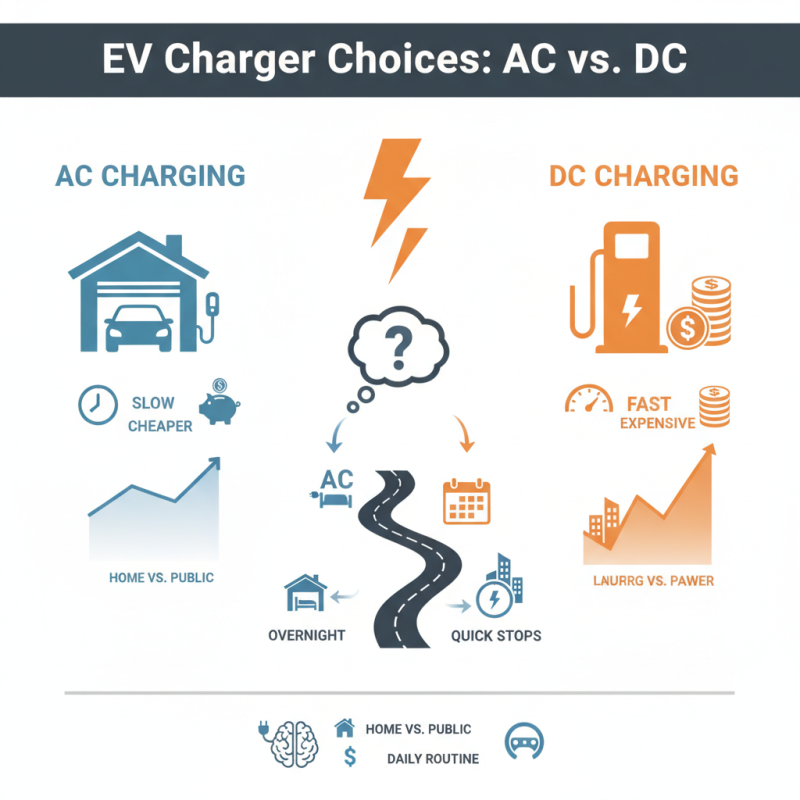
Choosing between AC and DC EV chargers can be challenging. Understanding what is the difference between AC and DC EV chargers is crucial before making a decision. AC chargers typically supply power at a lower rate. They are ideal for home charging and overnight usage. DC chargers, however, deliver power quickly. This makes them suitable for public charging stations where time is a factor.
When you're evaluating your options, consider your charging needs. Do you charge primarily at home or use public stations frequently? This consideration will guide you. Also, think about the cost. AC chargers are generally cheaper but slower. DC chargers can be expensive, but they save time.
This decision isn’t just technical; it impacts your daily routine. Understanding your driving habits is vital. The right choice can enhance your EV experience. Reflect on your usage patterns to make an informed decision.
Understanding the Basics: AC vs. DC Chargers for EVs
When choosing between AC and DC EV chargers, understanding how each type works is crucial. AC chargers convert alternating current into a suitable form for electric vehicles. They are generally slower, making them ideal for home charging applications. A Level 2 AC charger can provide about 25 miles of range per hour of charging, according to the U.S. Department of Energy.
Conversely, DC chargers deliver high-speed charging through direct current. They bypass the vehicle's onboard charger, allowing rapid replenishment of electricity. A typical DC fast charger can add around 80% of a vehicle's battery capacity in just 30 minutes. This option is often used in commercial environments or along highways where quick charging is necessary.
Consider your charging habits. For daily commuting, an AC charger could suffice. However, for long distances, a DC charger might be more beneficial. A recent survey by the International Energy Agency indicates that as EV adoption increases, understanding these options will become more vital for consumers. Ultimately, making the right choice depends on usage patterns and charging infrastructure available in your area.
Advantages of AC Chargers: When to Choose Them
When considering AC chargers for electric vehicles, you should focus on their specific advantages. AC chargers are widely used because they are compatible with most EVs. This compatibility makes them an accessible choice for many drivers. They operate with a standard electrical grid and can connect at home or at public charging stations.
One significant benefit of AC chargers is their slower charging speed. This might seem like a drawback, but it can actually be an advantage. If you park your vehicle for several hours, a Level 2 AC charger provides enough time to charge fully. It minimizes the risk of stressing the battery. Moreover, installation costs for AC chargers are often lower than for DC fast chargers. This affordability can be appealing for homeowners.
Additionally, AC chargers typically have a longer lifespan than their DC counterparts. They require less maintenance, which is crucial for long-term use. However, one should consider the charging needs based on daily driving habits. If you frequently drive long distances, relying solely on an AC charger may not be ideal. Assessing your charging routine and vehicle usage is essential.
Benefits of DC Chargers: Key Considerations for Fast Charging
When considering electric vehicle (EV) chargers, DC fast chargers stand out due to their efficiency and speed. They provide a more powerful charging option, making them ideal for long trips. Many users appreciate the rapid charging times. A typical DC charger can charge an EV to around 80% in about 30 minutes. This is a significant advantage for those who are constantly on the go.
However, it’s essential to weigh the costs and infrastructure requirements of DC chargers. Installation can be more expensive compared to AC chargers. The compatibility with your vehicle is another factor to consider. Not all EVs support DC charging, which could leave some drivers sidelined. Furthermore, accessibility can vary. Not every location has DC chargers readily available.
The benefits of DC chargers can be compelling, yet they come with challenges. Users might find themselves in need of better education on charging speeds and compatibility. Understanding these aspects can prevent frustration in the long run. Balancing urgency with practicality is crucial. Careful contemplation of individual needs will lead to a more informed decision.
How to Choose Between AC and DC EV Chargers for Your Needs?
This chart compares key metrics between AC and DC electric vehicle (EV) chargers. DC chargers offer much faster charging speeds and slightly higher efficiency compared to AC chargers, but they come with higher installation and maintenance costs. Understanding these metrics can help you choose the right charger for your needs.
Assessing Charging Needs: Home, Commercial, or Public Charging Solutions
Choosing the right EV charger involves understanding your specific needs. Whether it’s for home, commercial, or public use, the type of charging solution matters. Assessing your daily driving habits can guide your decision.
For home charging, consider how often you charge your vehicle. If you primarily drive short distances, a Level 2 AC charger might be sufficient. It offers convenience and can fully charge your EV overnight. However, if you have multiple EVs or travel longer distances regularly, investing in a DC fast charger could save you time.
In commercial settings, evaluate your customers’ needs. If your business sees high traffic, DC charging stations can provide rapid charging options. They attract more customers who appreciate quick service. Yet, they come with higher installation costs and maintenance.
Tips: Analyze the location of your charger installation. Proper placement ensures ease of access. Keep in mind the electrical infrastructure of your facility as it impacts charging speed. Regularly revisit your charging infrastructure needs as technology evolves.
Comparing Costs: Initial Investment vs. Long-Term Efficiency
When deciding between AC and DC EV chargers, cost considerations are crucial. Initial investments typically favor AC chargers. Prices for AC units range from $500 to $2,000, whereas DC fast chargers can start at $10,000 and soar to over $40,000. This stark difference can overwhelm users. Long-term efficiency may tip the scales. While AC chargers are slower, they suit home use. Owners can leverage overnight charging, maximizing lower utility rates.
On the other hand, DC chargers deliver quicker charging times. They add significant convenience, especially for commercial users. A report by the Department of Energy indicates DC chargers can recharge a vehicle to 80% in just 30 minutes. This speed translates into increased service capabilities for businesses. However, ongoing maintenance and electricity costs can add up for both types of chargers.
Tip: Assess charging needs. If you prioritize speed and higher traffic, consider a DC option despite the initial costs.
Tip: Explore incentives for EV infrastructure. Many regions offer rebates on installation costs, easing the financial burden.
Ultimately, your decision should align with usage patterns and financial expectations, as both charger types provide distinct long-term advantages.
Conclusion
Choosing between AC and DC EV chargers involves understanding what is the difference between AC and DC EV chargers. AC chargers are typically used for home and slower commercial charging, offering advantages in terms of lower installation costs and energy efficiency for long-term use. They are ideal for longer charging sessions where speed is not the primary concern.
On the other hand, DC chargers are designed for rapid charging, making them suitable for public charging stations where quick turnaround is essential. While they come with a higher initial cost, their efficiency in reducing charging time can be a significant consideration. Evaluating your specific charging needs—whether at home, for commercial purposes, or public usage—will help determine the most appropriate solution and cost considerations between the two types of chargers.

 Voltura Charger