Electric vehicles (EVs) are reshaping the automotive landscape. A recent report by the International Energy Agency indicates that global EV sales reached 10 million units in 2022, reflecting a 55% increase from the previous year. As the demand for EVs surges, efficient EV charging management becomes critical. Many businesses are seeking to optimize their charging infrastructure. This raises the question: "What software is used for EV charging management?"
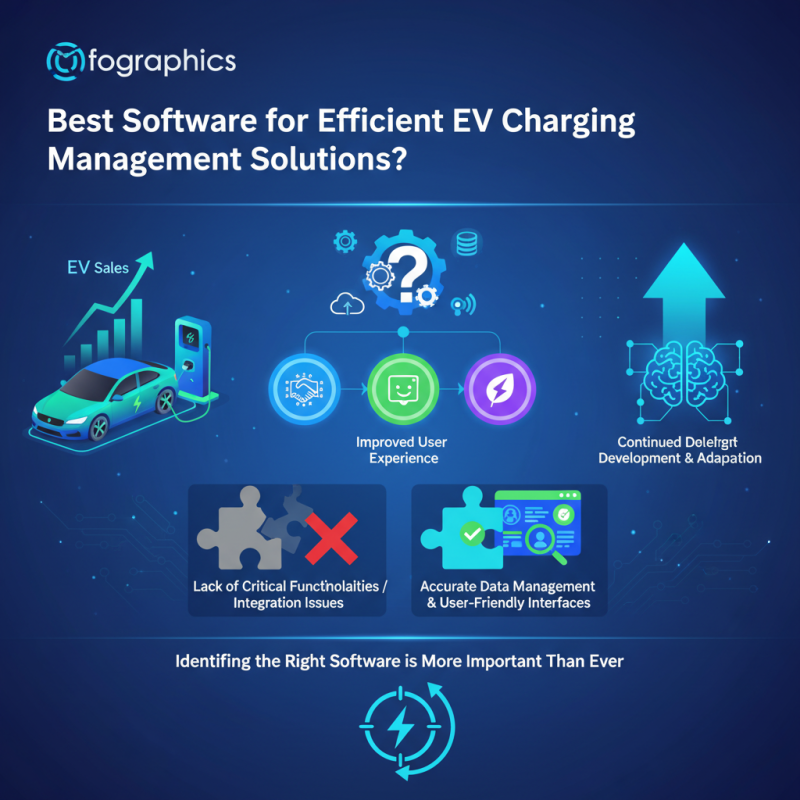
Software solutions for EV charging management are diverse and innovative. They help streamline operations, improve user experience, and enhance energy management. However, selecting the best solution can be challenging. Not all software is created equal. Some may lack critical functionalities or fail to integrate with existing systems. Accurate data management and user-friendly interfaces are essential.
As the industry evolves, it's important to reflect on the software landscape. While many solutions promise efficiency, not every option meets high standards. Continued development and adaptation are necessary to ensure reliability and effectiveness in managing EV charging networks. So, identifying the right software is more important than ever.
The rise of electric vehicles (EVs) is reshaping the transportation landscape. As of 2022, global EV sales reached 10 million units, a 55% increase from 2021. This growth necessitates effective EV charging management systems (CMS) to ensure that drivers have reliable access to charging points.
A robust CMS can optimize charging schedules, integrate renewable energy sources, and manage demand response. Research by the International Energy Agency (IEA) indicates that a well-implemented CMS can reduce overall energy costs by 20-30%. Data from 2023 shows that 70% of EV owners prefer charging at home. However, home charging alone cannot meet the demand as EV adoption accelerates. Urban areas must redefine their infrastructure with intelligent charging solutions.
Implementing a CMS, however, is not without challenges. Data security remains a critical concern, as hackers target charging networks. Additionally, public perception of charging speed and accessibility can hinder widespread adoption. The transition requires transparent communication and ongoing improvements in user experiences. The future hinges on continuous innovation and addressing these hurdles to create a seamless charging ecosystem.
A reliable EV charging management solution should prioritize user experience. The software must provide real-time monitoring of charging stations. Users need clear data on energy consumption and availability. This visibility enhances decision-making. It also improves operational efficiency.
Scalability is another critical feature. As the demand for electric vehicles grows, software should grow with it. Systems need to easily accommodate more stations. They should also support increased charging demands without lag. A system that struggles to scale may delay EV adoption.
Security features are vital too. Protecting user data is non-negotiable. Encryption and secure payment processing build trust. Users feel safer when their information is protected. Moreover, integrating maintenance alerts can prevent unexpected downtimes. This proactive approach helps maximize station availability. The focus should always be on creating a seamless experience for both operators and drivers.
The electric vehicle (EV) market is growing rapidly. A recent report indicates that global EV sales reached 10.5 million units in 2022, a 70% increase from the previous year. This surge creates a pressing need for efficient EV charging management solutions.
When evaluating charging management software, usability, scalability, and integration capabilities are critical. Some systems provide real-time monitoring, helping fleet managers adjust charging based on demand. Others focus on cost optimization, offering predictive analytics to forecast energy prices, enhancing cost savings. However, many platforms still struggle with data security issues. It’s crucial for companies to ensure robust security measures while adopting these solutions.
User satisfaction varies widely. Survey data reveals that 35% of EV users report difficulties in using current charging management systems. The onboarding process can be complex, often requiring extensive training. While some platforms are intuitive, others lack user-friendly interfaces. Addressing these challenges is essential for improving overall customer experience in the EV charging space.
Electric Vehicle (EV) charging is becoming a necessity as more drivers switch to electric. Efficient management of this charging process is crucial. Implementing EV charging management software can streamline operations and enhance user experience. This software allows for real-time monitoring of charging stations. Users can track availability and calculate costs effectively. Convenience is elevated when drivers can find nearby stations easily.
Integrating EV charging software also provides data analytics. This data can help organizations optimize energy usage. Understanding peak charging times aids in efficient planning. However, reliance on technology may pose challenges. System downtimes can disrupt operations, making it essential to have backup plans. Regular software updates can help in mitigating these risks.
Moreover, budgeting for EV charging management software is vital. While it offers various benefits, initial costs can be a barrier. Companies may hesitate to invest without seeing immediate returns. Evaluating long-term savings against initial outlay is crucial. Adopting a gradual implementation strategy can ease the transition and allow reflection on effectiveness.
The landscape of electric vehicle (EV) charging management is rapidly evolving. A report by the International Energy Agency (IEA) predicts that the number of EVs on the road could reach 300 million by 2030. This surge will necessitate advanced charging infrastructure to support efficient energy use. Predictive analytics and real-time data processing are becoming essential. These technologies optimize charging schedules based on energy demand and availability.
Additionally, integrating renewable energy sources into EV charging stations can enhance sustainability. According to the U.S. Department of Energy, it is possible to reduce greenhouse gas emissions by 40% through smart charging practices. The future of EV charging will increasingly involve smart grids. This allows for better load management and resource allocation. However, challenges remain. Cybersecurity risks must be addressed as systems grow more complex. The balance between convenience and safety is still in question.
As electric mobility expands, the role of software in managing charging solutions is crucial. Advanced tools will help fleet operators and individual users alike. Adoption hurdles, such as high initial investment and lack of standardization, require attention. These factors can hinder the progression toward an efficient EV charging ecosystem.
: Global EV sales reached 10 million units in 2022, showing a 55% increase from 2021.
A CMS optimizes charging schedules and integrates renewable energy, ensuring proper access to charging points.
About 70% of EV owners prefer charging at home, but it's not sufficient for rising demand.
Data security is a major concern, as charging networks can be vulnerable to hackers.
User satisfaction varies; some find CMS complex while others appreciate intuitive systems.
Data analytics help optimize energy usage and understand peak charging times for better planning.
System downtimes can disrupt operations, highlighting the need for robust backup plans.
Initial costs and uncertain immediate returns may deter companies from investing in these solutions.
A phased approach allows companies to reflect on effectiveness and manage costs better over time.
Usability, scalability, and integration capabilities are critical factors in the evaluation process.
The article titled "Best Software for Efficient EV Charging Management Solutions" explores the critical role of Electric Vehicle (EV) Charging Management Systems in optimizing the charging process. It discusses key features that contribute to the efficiency of EV charging software, such as load balancing, user authentication, and real-time monitoring. By conducting a comparative analysis of popular EV charging management solutions, the article highlights how different software can cater to varying user needs.
Furthermore, implementing robust EV charging management software offers numerous benefits, including improved energy management and enhanced user experience. Looking ahead, the article outlines future trends in EV charging management technologies, emphasizing the importance of adaptive software solutions. When considering what software is used for EV charging management, stakeholders can ensure a streamlined and efficient charging infrastructure, ultimately promoting the growth of electric vehicles.

Voltura Charger