Choosing an EV charger in 2026 is about more than picking a familiar brand. The right unit should match your vehicle, electrical supply, parking setup, and daily charging habits. A compact home charger may suit a driveway, while a shared garage needs clear access controls and dependable network features. Small details count.
This guide looks at leading EV charger brands through practical criteria: charging performance, safety documentation, weather protection, software support, warranty terms, and access to service. Product specifications and independent test results can help, but availability and support differ by region. A polished app cannot make up for unclear installation guidance or slow warranty responses. That matters.
For homeowners and fleet operators alike, the central question is “How to choose a reliable EV charger manufacturer”. Check whether the company explains its quality controls, publishes useful technical information, and offers support beyond the initial sale. Ask about replacement parts, firmware updates, and who handles troubleshooting. These questions are easy to overlook when a price looks attractive.
Brand rankings are useful starting points, not universal verdicts. The best choice depends on the charger’s intended location, your electrician’s assessment, and the service options where you live. Even careful research has limits; product lines change, and online reviews may reflect one installation rather than long-term performance. A reliable decision comes from matching evidence to your specific needs, then confirming the details before purchase.
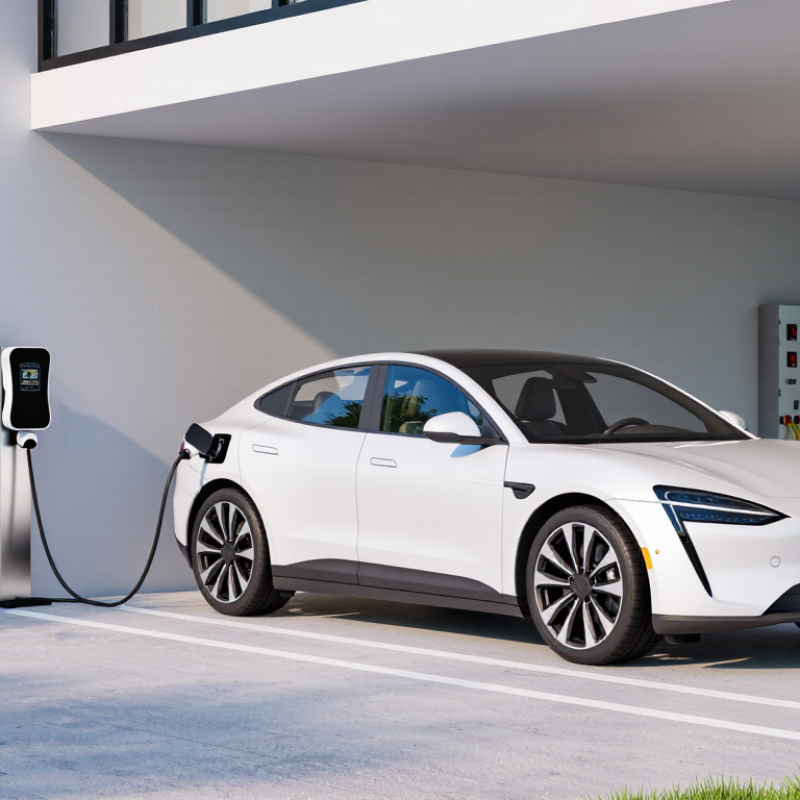
Level 2 AC units typically deliver 3–19 kW. That range matters. A 7.2 kW charger may add roughly 20–30 miles of driving range per hour, depending on the vehicle’s efficiency. Actual results vary. Battery temperature, onboard charger limits, and household wiring can all reduce the power reaching the car. A vehicle limited to 7 kW, for example, cannot take full advantage of a 19 kW wall unit. The neat number on a product label can be misleading.
For home use, compare the charger’s output with your vehicle’s AC charging limit and your home’s electrical capacity. Have a qualified electrician assess the panel and circuit before installation. A warm plug or repeated breaker trips deserves attention, not guesswork. Cable reach matters too: measure from the likely parking spot to the outlet, preferably with a little slack. Look for clear fault indicators, a sturdy cable, and documented safety testing. Maximum power is not always the best choice. A lower-output unit may suit your car and existing capacity better, though it could charge too slowly for your routine. That trade-off is easy to overlook when shopping.
The International Energy Agency reports that electric car sales exceeded 17 million worldwide in 2024. That growth signals a larger need for charging equipment at homes, workplaces, and public sites. It does not mean every driver needs the same charger. Daily distance, parking access, and local electrical capacity all shape a practical choice.
For a household, check the charger’s power rating, cable length, weather protection, and safety certification. A long cable can reach a driveway outlet more easily, but installation still needs a qualified electrical assessment. Apartment residents may depend on shared parking and building capacity, which can limit options. Details matter. For commercial sites, uptime, clear fault alerts, and service support can affect how reliably drivers charge. The market is expanding, but product labels do not always make comparisons simple. I would verify specifications against the vehicle manual and ask an installer to assess the site before purchase. Even then, real-world charging speed can vary with temperature, vehicle limits, and battery condition.
In 2026, EV charger makers differ less by appearance than by what they support: public charging networks, vehicle-linked services, modular home units, or high-power fleet equipment. Each approach has trade-offs. Network-focused providers may offer easier location discovery, while hardware specialists can provide flexible installation options. Industrial suppliers often emphasize service coverage and demanding operating conditions. For buyers, compare connector compatibility, software updates, warranty terms, and local repair response—not just advertised charging speed.
The International Energy Agency’s Global EV Outlook 2024 reported more than four million public charging points worldwide at the end of 2023, about 40% more than a year earlier. Public fast chargers grew by 55%. That rapid expansion makes reliability practical, not abstract. Check whether a unit reports faults clearly, resumes after a power interruption, and has parts available nearby. A sleek screen is nice. A working cable matters more.
For a home installation, ask an electrician to confirm panel capacity and cable distance before comparing prices. For a workplace or fleet, test load sharing and management software with realistic usage patterns. Ask vendors for uptime definitions and service-response records; figures can be measured differently. No comparison chart captures every bad Tuesday. I would also verify support locally, because a strong global reputation does not guarantee a quick repair in your town.
Typical equipment power ranges are shown in kilowatts. AC charging commonly delivers about 3.7–22 kW, while DC fast charging commonly ranges from 50–350 kW. Actual charging speed depends on the vehicle, charger, installation, and conditions; a higher-rated charger does not guarantee faster charging for every vehicle.
A dependable EV charger should have clear, checkable safety credentials. Look for documentation showing UL 2594 or IEC 61851 compliance for the exact model, not just a similar product family. The nameplate, manual, and certification record should match. If the paperwork is vague, ask the seller for the test certificate or a verifiable listing. Requirements can vary by market, so confirm the applicable standard with a qualified installer. A certificate helps, but it is not a promise that every installation will be trouble-free.
Tips: Photograph the charger’s rating label before installation. Check that its model number matches the documents. Ask who handles warranty claims and how quickly support typically responds. Small details matter.
Read the warranty before comparing prices. Check its duration, start date, and whether parts, labor, and replacement shipping are included. Note exclusions for outdoor exposure, incorrect installation, or damage from power events. Keep the receipt and installation record; they may be needed for a claim. Ask whether the warranty transfers if you move. Real support matters. A long warranty can still be frustrating if the process is unclear, so request the claim steps in writing and keep a copy.
Start with the vehicle’s charging port and your daily routine. A connector that does not fit is no bargain. Check the owner’s manual and the charger’s specifications before comparing prices. Also measure the cable route: a short cable may not reach when the car is parked nose-in. For apartment parking, ask whether the installation can support a dedicated circuit and whether other drivers share the equipment. Small details matter.
Charging speed should match both the vehicle and the electrical supply. A higher-rated charger cannot make a car accept power faster than its onboard system allows. If the car stays parked overnight, moderate charging may be enough. For frequent, short stops at home, quicker charging could be more useful. Smart features can schedule charging during preferred hours, track energy use, or send fault alerts. Keep the basics in mind. An app that depends on unreliable Wi-Fi can become a nuisance, so check whether the charger still works manually. It is easy to overvalue a long feature list; I might choose a simpler unit with clear controls and dependable support instead.
Choosing by use case: match the connector, charging speed, and smart features to your vehicle, location, and daily charging needs.
| Use Case | Connector to Check | Practical Charging Speed | Useful Smart Features | Reliability Checks |
|---|---|---|---|---|
| Overnight home charging Daily driving with several hours available to charge |
AC connector supported by the vehicle and local market; commonly Type 1 or Type 2, with NACS also used in some North American vehicles | Typically 7–11 kW AC, subject to the vehicle’s onboard charger, electrical supply, and installation | Scheduled charging, app-based monitoring, energy-use history, and optional off-peak scheduling | Verify certified electrical safety, weather rating for the installation location, warranty terms, and availability of replacement cables |
| Home charging with limited electrical capacity Older homes or shared electrical service |
Use the vehicle-compatible AC connector; confirm that the charging equipment supports the intended current | Often 3.7–7.7 kW AC; a lower rate can still meet daily needs when the vehicle is parked for many hours | Adjustable current limits, scheduled charging, and dynamic load management to reduce the risk of overloading the supply | Have a qualified electrician assess the circuit, breaker, wiring, and available service capacity before installation |
| Apartment or shared parking Residents using a common parking area |
Connector compatible with the vehicles using the site; consider cable management and access for different parking layouts | Usually AC charging in the 3.7–22 kW range, depending on the building supply and number of chargers sharing power | User authentication, access control, usage reporting, billing support, and power sharing across multiple charging points | Check network availability, support for multiple users, clear payment terms, and continued access if internet service is interrupted |
| Workplace or destination charging Charging during a workday, visit, or longer stop |
AC connector commonly used by vehicles in the region; confirm cable reach and connector access before installation | Typically 7–22 kW AC where site capacity allows; actual vehicle charging may be limited by its onboard charger | Reservation or access controls, usage reports, scheduled charging, and load balancing across charging spaces | Choose equipment suited to indoor or outdoor exposure, with clear maintenance arrangements and accessible user support |
| Public rapid charging Short stops on highways or during longer trips |
DC connector must match the vehicle and regional network: CCS1, CCS2, or NACS are common options; CHAdeMO remains in use for some vehicles and locations | Commonly 50–150 kW DC; some sites offer higher output, but the vehicle’s charging curve, battery temperature, and state of charge affect the rate | Live stall status, route planning, payment options, charging-session monitoring, and clear fault reporting | Confirm connector availability on regular routes, station uptime information, accessible support, and transparent pricing |
| High-power corridor charging Compatible vehicles making brief highway stops |
DC connector supported by both the vehicle and station; check vehicle-specific maximum DC input before relying on high-power charging | Equipment may be rated around 150–350 kW DC, but many vehicles accept less; peak power is not maintained throughout the session | Live availability, navigation integration, automatic session records, and payment that works across supported locations | Assess site redundancy and alternate nearby stations; high rated output alone does not guarantee a faster charge for every vehicle |
| Commercial fleet depot Multiple vehicles charging on a planned schedule |
Standardize connectors where practical while accounting for the fleet’s vehicle mix and local charging standards | AC charging is often suitable for long overnight dwell times; DC charging can support vehicles with shorter turnaround windows | Centralized monitoring, user or vehicle identification, energy reporting, load management, and OCPP support where interoperability is required | Check software compatibility, service response arrangements, scalability, electrical capacity planning, and data-export options |
Important: Charging connectors and electrical standards vary by country. Charging power is limited by the lowest applicable capacity of the vehicle, charger, cable, and site supply. Confirm vehicle compatibility and consult a qualified electrician or charging provider before installation.
Match the model number on its rating label, manual, and certification record. Ask for verifiable paperwork if details are unclear. Small details matter.
Review its duration, start date, and coverage for parts, labor, and shipping. Check exclusions for outdoor exposure or incorrect installation. Keep your receipt.
Ask who manages claims and how to submit them. Request the steps in writing. Real support matters.
Check your vehicle’s manual and the charger’s specifications before buying. A connector that does not fit is no bargain.
Measure the route to your parking spot. Consider whether you park nose-in. A short cable may not reach.
Not necessarily. The vehicle’s onboard system limits its charging speed. Overnight parking may make moderate charging sufficient.
Scheduling, energy tracking, and fault alerts can help. But an app relying on weak Wi-Fi may become a nuisance.
It depends on your routine. I might favor clear controls and dependable support, though I could be overlooking a useful feature.
Choosing an EV charger starts with understanding your charging needs. Level 2 AC chargers typically provide 3–19 kW, with charging speed depending on the vehicle, electrical supply, and charger capacity. As electric-vehicle sales continue to grow, the 2026 market offers a wide range of home and commercial charging options, making it important to compare features rather than rely on name recognition.
How to choose a reliable EV charger manufacturer? Check that the equipment complies with relevant safety and performance standards, such as UL 2594 or IEC 61851, and review warranty coverage and support terms. Then match the connector type and charging speed to your vehicle and installation. Smart features, including scheduling and usage monitoring, can add convenience, but should fit your preferences and budget. A reliable choice balances compatibility, verified quality, clear warranty terms, and practical features.

Voltura Charger